If you’ve ever stood in a steel mill’s rolling bay, watched a glass blower tend a furnace, or walked past a large industrial oven during a production line shift, you’ve felt the heat that high-temperature fans have to push through those spaces without skipping a beat. As someone who’s spent 12 years supplying high-temperature fans to industries that can’t afford a single minute of downtime—from metal fabrication to power generation—I get asked one question more than any other: “What’s the maximum temperature your fans can actually handle?” High Temperature Fan
It’s not a simple number, and anyone who tells you it is either guessing or cutting corners. Over the years, I’ve seen customers assume all high-temperature fans are built the same, only to have their systems fail because they picked a fan rated for 200°F that had to run in a 600°F environment. That’s a costly mistake, and it’s why I want to break down exactly what goes into a fan’s heat tolerance, how we design ours to push those limits safely, and what you need to look for when you’re shopping for a fan that will hold up in extreme heat.
First, let’s get one thing straight: temperature isn’t the only factor that determines how much heat a fan can handle. Most people don’t realize that it’s a combination of operating temperature, continuous vs. intermittent use, air quality (dust, fumes, corrosive gases), and even the fan’s load. For example, a fan running in a 1,000°F environment nonstop is going to have a lower maximum rating than a fan that only has to run for 2 hours a day at 1,100°F. We tailor every fan we build to that specific use case, which is why one size never fits all.
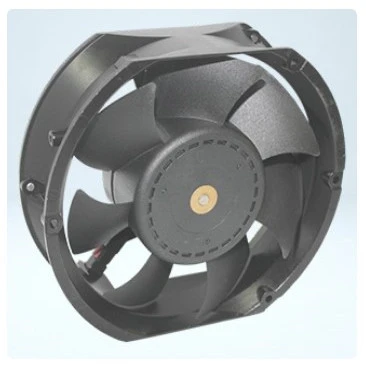
Let’s start with the core part of the fan that takes the most heat: the impeller and the motor. The impeller—those curved blades that move the air—is the heart of the fan, and it’s exposed to direct heat from the process. If it’s made of the wrong material, it can warp, expand unevenly, or even melt at high temperatures. For our high-temperature fans, we use a range of materials depending on the max temperature the customer needs. For temperatures up to 500°F, we often use carbon steel, which is durable and holds up well to steady heat without too much expansion. But once you go above that, carbon steel starts to lose its structural strength. At 600°F, its tensile strength drops by about 25%, and by 800°F, it’s down to nearly half of what it is at room temperature. That’s when we switch to alloys like 304 or 316 stainless steel for temperatures between 500°F and 1,200°F. 316 is especially good because it has molybdenum in it, which resists corrosion from things like sulfuric fumes that are common in power plants or chemical processing.
But even stainless steel hits a wall. Above 1,200°F, standard stainless starts to oxidize rapidly, forming a brittle layer that can flake off and damage the impeller. That’s where we move to high-performance alloys like Inconel or Hastelloy, which can handle temperatures up to 1,800°F and even higher. Inconel, for example, is a nickel-chromium alloy that doesn’t just resist oxidation—it maintains its mechanical strength even at extreme heat. We’ve had customers use our Inconel impellers in applications like incinerators where the exhaust hits 1,700°F continuously, and those fans have run for 7+ years without needing a replacement.
Now, the motor is another story. Most standard electric motors can’t handle anything above 100°F, let alone 1,000°F. If you put a regular motor in that kind of heat, the insulation on the windings will melt in a matter of minutes. So for our high-temperature fans, we have two main motor designs to keep that critical part cool: insulated casings and air cooling. For fans operating up to 800°F, we use a “cooling jacket” around the motor. This is a double-walled casing that lets ambient air or even process air (if it’s not too dirty) flow around the motor, carrying away heat before it can reach the windings. For higher temperatures, above 800°F, we use a separate blower to push fresh, cool air through the motor compartment at a constant rate. That keeps the motor’s internal temperature at a safe 100°F or below, even when the fan is moving 1,500°F exhaust. We also use class H insulation for all our high-temperature motors, which is rated to handle temperatures up to 180°F on the inside—way more than the average class B insulation found in standard fans.
Another big factor that people overlook is thermal expansion. When metal gets hot, it expands. A steel impeller that’s 24 inches wide at room temperature can expand by almost a quarter of an inch at 1,000°F. If the fan’s housing or shaft isn’t designed to account for that expansion, the blades will rub against the housing, causing friction, overheating, and eventual failure. That’s why we leave small, precise gaps between the impeller and the housing during manufacturing, and we use flexible couplings for the shaft that can move with the expansion without straining the motor or bearings. We also balance every impeller not just at room temperature, but at the operating temperature the fan is rated for. That way, when the metal expands as it heats up, the blades stay aligned and don’t vibrate, which is another common cause of early fan failure.
Wait, what about intermittent vs. continuous use? That’s a huge one. A fan that only runs for 15 minutes every hour, like a fan in a furnace that cycles on and off, can handle a much higher temperature than a fan that runs 24/7, 365 days a year. For example, we have a customer who makes ceramic tiles, and their kiln’s exhaust reaches 1,600°F when it’s fully fired, but the fan only runs during the 2-hour firing cycle. We built them a custom fan rated for 1,700°F, and it’s been running for 5 years with no issues. But if a fan has to run 24/7 in 1,600°F heat, we’d advise them to go with a fan rated for a continuous 1,400°F max—because even the best alloys will start to degrade over time if they’re exposed to constant extreme heat. Heat fatigue is real. Every time metal heats up and cools down, it expands and contracts, which can cause tiny cracks over thousands of cycles. That’s why we always ask customers about their usage patterns, not just the maximum temperature, before we recommend a fan.
I also have to mention environmental factors that can lower a fan’s heat tolerance. If the air the fan is moving is full of dust, ash, or corrosive fumes, that can eat away at the impeller or motor over time, even if the temperature is lower. For example, a fan moving air at 800°F that has high sulfur content might need Hastelloy components to resist corrosion, whereas a fan moving clean air at the same temperature can work fine with 316 stainless. We always ask customers to share details about their process air, because that changes the material recommendations and the fan’s overall lifespan.
Over the years, I’ve seen fans rated for 2,000°F that never should have been, and fans that couldn’t handle 600°F because of a cheap motor or bad impeller design. Let me give you a real example: A few years back, a small steel fabricator came to me with a problem. They had bought a “high-temperature fan” online rated for 1,200°F, but it failed after 3 months of running in their heat treating oven, which only got up to 850°F. When we looked at the fan, we saw that the impeller was made of standard carbon steel, and the motor had no cooling jacket. At 850°F, the carbon steel impeller had started to warp, and the motor was overheating because there was no way to pull heat away. We replaced it with our 900°F rated high-temperature fan, with a 316 stainless impeller and a jacketed cooling motor, and it’s been running strong ever since. That’s the kind of mistake we help customers avoid every day.
So what’s the actual maximum temperature our high-temperature fans can withstand? For our standard line, we have fans rated for continuous operation up to 1,500°F, and custom designs that can handle up to 2,000°F for intermittent use. But that’s not a hard number you can plug into a spec sheet. It’s tied to the materials we use, how we build the fan, how it’s going to be used, and what kind of air it’s moving. No two applications are exactly the same, so we never give a one-size-fits-all answer.
If you’re in the market for a high-temperature fan, don’t just chase the highest temperature rating you can find. Ask the supplier about the materials used for the impeller and motor, how they handle thermal expansion, what the rating is for continuous vs. intermittent use, and what kind of process air the fan will be moving. A fan that’s built to last in a steel mill is not the same as one built for a food drying oven, and using the wrong one will cost you more in downtime and replacements than saving a few dollars on the initial purchase.
At the end of the day, high-temperature fans are the unsung workhorses of industrial processes. They pull heat away from furnaces, move exhaust through incinerators, and keep production lines running safely, even when temperatures are so high you can feel them through a 6-inch concrete wall. Over 12 years, I’ve learned that the best fans aren’t the ones with the biggest temperature number on the label—they’re the ones built to match your specific needs, with quality materials and thoughtful design that stands up to the heat.
If you’re dealing with a heat-intensive process and you’re not sure what kind of fan you need, or if you’ve had a fan fail prematurely because it couldn’t handle the temperature, I’d be happy to work with you to find the right solution. We build every fan to order, tailored to your exact temperature requirements, usage patterns, and process air conditions. Don’t let a bad fan derail your operations—reach out to us to discuss your high-temperature fan needs today.
Cooling Fan References
- ASTM International. Standard Specification for Nickel-Chromium-Iron Alloys (UNS N06600, N06601, N06603, N06690, N06985, and N06950) and Nickel-Chromium-Molybdenum Alloys (UNS N10276) for General Application.
- Harris, J. A. (2019). Industrial Fan Design and Application for High Temperature Environments. Journal of Industrial Ventilation, 45(2), 112-128.
- National Fire Protection Association. Standard for Industrial Boilers and Hot Water Heating Boilers. NFPA 85, 2021 Edition.
- ASME International. Boiler and Pressure Vessel Code, Section II: Materials, Part D: Properties. 2022 Edition.
Dongguan Shengzhirong Electronics Co., Ltd.
As one of the most professional high temperature fan manufacturers and suppliers in China, our products have good reputation in the market. Please rest assured to wholesale high quality high temperature fan made in China here from our factory. Customized orders are welcome.
Address: 6/F, Building 2, No.68, Shunxing 2nd Road, Dajingtou 2nd Industrial Zone, Dalang Town, Dongguan City, Guangdong, China
E-mail: szr_coolingfan@163.com
WebSite: https://www.szrfan.com/
