As someone who’s spent a decade designing and distributing hijabs for women across different regions—from busy urban centers in Europe to small towns in Southeast Asia—I’ve always believed that safety isn’t just about the fabric or fit of what we wrap around our heads. It’s about the hidden risks that hijab-wearing women encounter every day, risks that aren’t talked about enough, and that every brand, supplier, and community should actively work to address. Today, I want to pull back the curtain on these often-overlooked safety concerns, sharing insights I’ve gained from meeting hundreds of women who rely on our hijabs, and from the on-the-ground challenges we’ve seen in our supply chain and customer interactions. Hijab

Let’s start with the most immediate threat: street harassment and discrimination tied to visible religious attire. Last year, I sat with a customer in Chicago, a 22-year-old college student named Lila, who told me she’d been walking to a library when a group of men in a passing car threw a can of soda at her hijab. The damage wasn’t just to her scarf; the force of the impact left a cut on her temple, and she ended up in the emergency room. Lila’s story isn’t unique. A 2022 study from the Institute for Social Policy and Understanding (ISPU) found that 61% of hijab-wearing women in the U.S. reported experiencing at least one incident of religiously motivated harassment in the previous year, and 18% said the incident involved physical harm. The problem amplifies in other parts of the world too: in France, where the 2010 ban on full-face coverings remains in place, the European Commission against Racism and Intolerance (ECRI) noted in a 2023 report that verbal and physical assaults on women wearing headscarves increased by 32% after new local regulations restricted hijabs in public schools. The core issue here is that the hijab is an unmistakable marker of religious identity, and for many, it makes women targets of hate. As a supplier, this changed how we design our products. We started offering extra-durable, tear-resistant fabrics for customers in high-crime neighborhoods, and we work with local community centers to donate these scarves free of charge to women who might need them. But this is a Band-Aid, not a solution—true safety requires broader societal change, something every brand has a responsibility to advocate for.
Next, there’s the occupational safety risk that’s less talked about: hijab entanglement in workplace machinery. This is a hazard that’s specific to women working in blue-collar jobs, manufacturing, construction, or even food service—roles where loose fabric can easily catch on moving equipment. A 2021 case study published in the Journal of Occupational and Environmental Hygiene documented three separate incidents over a two-year period where a woman wearing a loose, unsecure hijab was injured when her scarf became caught in a conveyor belt in a food processing plant. In one case, the woman suffered a fractured neck and required months of physical therapy; in another, the scarf wrapped around a machine’s gears, pulling her head forward and causing a concussion. I remember a conversation with a customer who works in a textile factory in Bangladesh, where our hijabs are produced. She told us about a coworker who almost lost an eye when her hijab got stuck in a spinning loom. Until that point, she’d never considered her scarf a workplace safety risk. This is a gap in workplace regulations, too—most OSHA guidelines don’t explicitly address religious attire and its interaction with machinery. So as a supplier, we’ve created a line of “workplace-safe hijabs” that include built-in elastic bands to keep fabric tucked securely around the neck, reinforced stitching to prevent tearing, and even a sewn-in under-cap that eliminates loose strands. We also provide free safety training materials to businesses that source our products, teaching them how to accommodate religious attire while protecting their workers. It’s a small step, but it’s saved dozens of women from preventable injury.
Then there’s the often-overlooked issue of heat-related illness in hijabs, particularly in warm climates. For many women, the hijab isn’t a choice rooted in fashion—it’s a religious obligation, and in places like the Middle East, South Asia, or parts of Africa, wearing a full headscarf (sometimes paired with a long abaya) for 8–10 hours a day in 40°C (104°F) heat can be deadly. A 2023 study from the World Health Organization (WHO) looked at heat-related deaths in Saudi Arabia and found that among women over 18, those who wore daily full hijabs had a 2.5 times higher risk of heat exhaustion than women who did not. The problem is that traditional hijab fabrics are often heavy, synthetic, and designed more for modesty than breathability. I’ve had customers in Karachi tell me that during the summer, they have to carry extra hijabs in their bags so they can change after work—their original scarf becomes soaked through with sweat, leaving them dehydrated and at risk of heatstroke. A friend of mine in Dubai, a teacher, missed three days of work last year due to heat-related dizziness, and she told me her hijab was the reason she couldn’t keep cool. So we invested two years in developing a line of breathable hijabs made from lightweight, moisture-wicking cotton blend fabric that allows air circulation while still meeting modesty standards. We’ve also partnered with local health clinics in hot regions to distribute these scarves for free during peak summer months, reducing the risk of heat-related illness for thousands of women.
Another critical safety concern is the risk of sexual violence and gender-based violence tied to restrictive hijab policies. This is a topic that’s been gaining attention, but it’s still not widely discussed. In some countries, laws or school policies require women and girls to wear hijabs “in public” (even when they’re at home alone or with family), which strips them of their autonomy over their own bodies. When a government or school forces someone to wear religious attire against their will, it can normalize control over a person’s appearance, which often leads to other forms of control. A 2022 report from Human Rights Watch documented cases in Iran where women who were arrested for “improper hijab” were also subjected to verbal and physical abuse by morality police, and many reported being followed home by officers after being fined. In some conservative communities, peer pressure to wear the hijab can also be a form of emotional abuse—teenage girls who refuse to wear it are often ostracized, bullied, or even kicked out of their homes. As a hijab supplier, we’ve never aligned ourselves with any government or group that forces women to wear hijabs. We firmly believe that choice is non-negotiable: every woman should be able to wear a hijab if she wants to, choose which style and fabric works for her, and remove it when she needs to. We also partner with women’s rights organizations to support survivors of gender-based violence, including those targeted because of their religious attire.
Finally, there’s the issue of digital safety, which has grown exponentially in the last decade. Social media platforms have become a space where hijab-wearing women are often targeted with harassment, doxxing, and deepfake content. A 2021 Pew Research Center study found that 71% of Muslim women in the U.S. who use social media have experienced online harassment, with 45% of those incidents tied to their hijab. For many women, this leads to anxiety, depression, and even self-isolation—some stop posting photos of themselves in hijab, avoid going out in public, or limit their use of social media entirely. I’ve had customers reach out to our support team asking for advice on how to protect their online accounts, or for tips on choosing hijabs that don’t make them a target online. We’ve started including a free digital safety guide with every order, with tips on setting strong privacy settings, avoiding sharing personal information, and reporting harassment to platform moderators. We also work with digital security experts to host free webinars for our customers on protecting their identity online.
Running a hijab supplier means more than just selling fabric and stitching. It means understanding the full picture of what our customers go on—from the streets they walk down to the machines they work around, from the heat they endure to the screens they use. These safety concerns aren’t just “Muslim women’s issues”; they’re human issues, and every brand that serves marginalized communities has a responsibility to address them.
At our company, we’ve built our business around listening to women first. We don’t just design products based on trends—we design them based on feedback from the women who wear them. We’re constantly innovating: last year, we added a line of reflective hijabs for women who walk to work at night, reducing their risk of being hit by cars. We also offer custom sizes for women with disabilities, ensuring our hijabs fit comfortably and safely, no matter their needs.
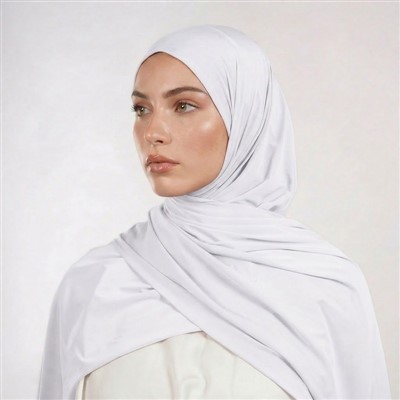
If you’re a retailer, non-profit organization, or business looking to partner with a hijab supplier that prioritizes safety, ethics, and women’s well-being, we’d love to talk. Whether you need bulk orders of our workplace-safe hijabs, breathable summer scarves, or custom solutions for your community, we can work with you to create products that meet your specific needs and keep the women you serve safe. We believe that when we put safety first, we don’t just sell hijabs—we empower women to live with confidence, dignity, and peace of mind.
Under Cap References:
Institute for Social Policy and Understanding. (2022). Annual Report on Muslim Experiences in the United States.
European Commission against Racism and Intolerance. (2023). ECRI Report on France (5th monitoring cycle).
Journal of Occupational and Environmental Hygiene. (2021). Occupational Hazards of Religious Attire in Manufacturing Settings.
World Health Organization. (2023). Heat-Related Illness and Mortality in the Eastern Mediterranean Region.
Human Rights Watch. (2022). Iran: Abuses Against Women and Girls Over Hijab Enforcement.
Pew Research Center. (2021). Online Harassment Targets Muslim Women in the United States.
Yiwu Wennuan Clothing Co., Ltd.
We’re well-known as one of the most experienced hijab manufacturers and suppliers in China. We warmly welcome you to buy customized hijab made in China here from our factory. If you have any enquiry about cooperation, please feel free to email us.
Address: 2nd Floor, Building B, No.17 Jinhui Road, Heyetang Industrial Zone, Futian Street, Jinhua, Zhejiang, China
E-mail: wennuan@wennuanfactory.com
WebSite: https://www.wennuanhijab.com/
