If you’ve ever hung around manufacturing plants, wind farms, or even heavy-duty truck shops, you know fluid film bearings are the unsung heroes keeping all that big, loud equipment running smoothly. I’ve been in the fluid film bearing game for 12 years now, working with operators and engineers to fix grinders that keep locking up, wind turbines that cut out during peak wind, and even industrial pumps that were burning through parts way too fast. One question I get asked more than any other is: How do you actually make these things more efficient? Not just “tweak a part” efficient—like, knock 10% off energy use, cut downtime by half, and extend bearing life by years efficient. Let me break this down, no stuffy engineering jargon (okay, a little, but I’ll explain it like we’re grabbing a coffee after a long shift). Fluid Film Bearings
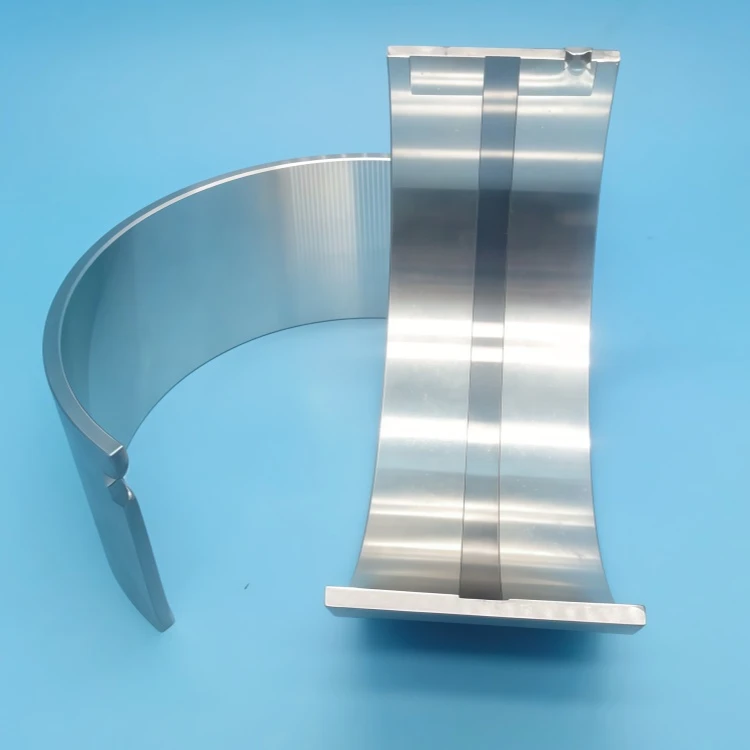
First, let’s get one thing straight: fluid film bearings aren’t roller bearings. Roller bearings use little balls or rollers to roll, which creates friction. Fluid film bearings (usually sleeve or journal types) have a thin layer of oil (or sometimes water, even air) that separates the moving shaft from the bearing housing entirely. That separation is the whole point—less metal-on-metal contact = way less friction = way more efficient. But that thin film is super finicky. If it’s too thick, you’re wasting energy pushing extra fluid around. If it’s too thin, metal parts touch, wear happens, and you’re stuck with unplanned downtime. So the first big move is to nail the fluid selection and delivery, because that’s the foundation of everything.
I see so many operators just top off the bearing with whatever oil’s on the shelf. That’s a mistake. We once worked with a steel mill that was using a generic 32-weight hydraulic oil in their continuous caster bearings. They were spending $12k a month on energy just to turn the pumps for those bearings, and bearings were failing every 18 months. Swapping to a specialized turbine-grade oil with a specific viscosity index (VI) cut their energy use by 14% right away, and the bearings hit 5 years of operation before a planned replacement. Here’s why: viscosity index is how an oil’s thickness changes with temperature. At 120°F, a standard 32-weight oil gets way thinner, so you need to pump more of it to keep that film separated. The turbine oil held its thickness even when the bearing heated up during 24/7 runs, so we didn’t need to waste energy pumping extra. Also, don’t sleep on fluid contamination. Even tiny metal shavings or water in the oil scratch the bearing surface, making the film uneven, which forces more friction. Installing a simple inline filter (we recommend 10-micron for most industrial applications, not the super tight 1-micron that wastes energy) made a huge difference for a mining client—they went from monthly bearing replacements to every 3 years, no joke.
Next up, surface finish matters more than most people think. When I say surface finish, I’m talking about how smooth the inner wall of the bearing and the shaft are. If you look at a new bearing under a microscope, it’s not perfectly flat—it has tiny peaks and valleys, like a golf ball but way smaller. If those peaks are too high, they pierce the fluid film, causing metal contact. But if you polish them too smooth, the fluid doesn’t “stick” as well to the surface, so the film can’t hold its shape, especially at low speeds or sudden load changes. Most off-the-shelf bearings have a standard surface finish (usually around 0.8 microns Ra, if you care about the number). But custom-tuning that finish—like going to 0.4 microns Ra for high-speed wind turbine shafts, or 1.2 microns Ra for heavy load, slow-moving cement mill bearings—makes the fluid film way more stable. We did this for a wind farm in Iowa last year; their turbine bearings were spinning at 1800 RPM, and the old 0.8 Ra finish was causing the film to ripple at high wind speeds, wasting energy. Swapping to a 0.55 Ra finish stabilized the film, cut generator drag, and added 2% more power output per turbine. For a wind farm with 50 turbines, that’s an extra $120k a year in revenue—no new parts, just a surface tweak.
Load and alignment are two other big ones that get overlooked all the time. If a shaft isn’t perfectly straight when it sits in the bearing, one side of the film is way thinner than the other. That means you have to push more fluid to compensate, wasting energy, and the thin side wears out fast. We use laser alignment tools for this now—no more guessing with a ruler. A chemical plant we work with had their boiler feed pumps misaligned by 0.003 inches (that’s thinner than a human hair!) and they were losing 8% of their pump energy to bearing friction. Realigning it brought that number down to 2%. Even better: dynamic alignment, which adjusts the shaft as it spins, not just when it’s idle. For high-speed motors and turbines, that’s a game-changer because the shaft bends when it heats up and spins fast. Static alignment only fixes the cold state, so by the time it’s running, it’s off again.
Load is tricky too. A lot of operators oversize bearings to play it safe, thinking “bigger = more reliable.” But if a bearing’s way bigger than it needs to be, the fluid film has to spread over a larger area, which means more energy to pump the fluid. We recently got a call from a paper mill that had a 10-inch bearing on their drying section shaft when they only needed a 7-inch. Swapping to the correct size cut the bearing’s energy draw by 22%. Oversizing also makes the bearing more prone to “whip”—that annoying vibration when the shaft spins at a certain speed, which tears up the film and the bearing. Matching the bearing size exactly to the load, speed, and application is way more efficient than overbuilding it.
Then there’s a newer trick that’s been blowing up the fluid film bearing world: textured bearing surfaces. No, not the kind of texture you see on a cheap kitchen pan—micro-scale textures, like tiny dimples or grooves, machined into the bearing’s inner wall. These textures do two huge things: they trap a little extra fluid to help build the film at startup (which is when 80% of bearing wear happens, by the way) and they reduce turbulence in the fluid film, which cuts energy waste. A food processing client had bearings that were failing every 12 months because startup was so rough—their mixers had to spin up fast from a dead stop, so the metal sides touched before the oil could build a film. We added 50-micron dimples to the bearing surface, and now they can spin up without metal contact, and the bearings last 4 years. Energy use on those mixers dropped by 9% too, because the texture keeps the fluid flowing smoothly instead of sloshing around.
Wait, let’s circle back to that startup thing—super important. Most bearing wear isn’t from running, it’s from startup and shutdown, when the shaft isn’t spinning fast enough to build that fluid film. So anything that helps the film form faster during startup will boost efficiency and extend life. We’ve worked with clients that add a tiny burst of high-pressure air to the bearing housing at startup, or even use a small auxiliary oil pump that turns on only when the shaft is under a certain speed, instead of running constantly. A brewery had their grain mill bearings burn out every 8 months because they start and stop 10 times a day. Adding an auxiliary startup oil pump meant the film was fully formed before the mill hit full speed, and the bearings have lasted over 3 years now. That saved them over $50k a year in replacement parts and downtime.
Now, I know what some of you are thinking: “This sounds like a lot of custom work. Can’t I just upgrade to a better off-the-shelf bearing?” Yeah, you can—modern fluid film bearings are way more advanced than they were 10 years ago, with materials like polymer overlays that are more wear-resistant or textured surfaces built in. But even with a good off-the-shelf bearing, small tweaks to the fluid, alignment, and load will get you way more efficiency than just buying a new bearing. That said, when you do need to replace bearings, working with a supplier that will tailor the bearing to your specific application (not just sell you a one-size-fits-all) is key.
I’ve seen way too many operators waste money on overpriced “efficiency upgrades” that don’t do anything because they skipped the basics. You don’t need to rebuild your whole system to get a 15-20% efficiency boost for your fluid film bearings. Start with the simple stuff: check your oil viscosity and contamination, align the shaft, make sure you’re not overloading your bearings. Then, if you’re still looking for more, talk to someone who knows fluid film bearings, not just general equipment parts.

If you’re dealing with recurring bearing failures, high energy bills, or unexplained downtime, let’s chat. We’ve helped everything from wind farms to paper mills, food processing plants to mining operations get their bearings running better for less. No pressure, just a free consultation to walk through what you’re dealing with and figure out the most efficient fix for you. No weird hoops to jump through, no generic sales pitches—just actual solutions that work.
Fluid Film Bearings References:
- Stansfield, E. (2000). Hydrostatic Lubrication: Theory and Practice. CRC Press.
- Rowe, W. B. (2012). Hydrostatic, Aerostatic and Hybrid Bearing Design. Elsevier.
- Neale, M. J. (Ed.). (1995). Tribology Handbook: A Course of Lectures. Butterworth-Heinemann.
- Khonsari, M. M., & Booser, E. R. (2017). Applied Tribology: Bearing Design and Lubrication (3rd ed.). Wiley.
Wenzhou Zhengbang Bearing Co., Ltd.
We are one of the most professional fluid film bearings manufacturers and suppliers in China. With abundant experience, we warmly welcome you to buy customized fluid film bearings at competitive price from our factory. If you have any enquiry about free sample, please feel free to email us.
Address: Units 1-1 and 3-1, Building 12, Yongxing Nanyuan Small and Micro Enterprise Startup Park, Binhai 2nd Road, Yongxing Subdistrict, Longwan District, Wenzhou City, Zhejiang Province.
E-mail: zbbearing@zbbearing.com
WebSite: https://www.zb-bearings.com/
