If you’ve worked in commercial building management at any level over the last decade, you’ve likely heard about VRF—variable refrigerant flow systems—hailed as the holy grail of HVAC for mid-sized to large commercial spaces. As a commercial HVAC system supplier, I’ve installed, serviced, and troubleshooted VRF systems for offices, retail spaces, and multi-tenant buildings across the Midwest, and I get why they’re so popular: they promise zoned comfort, lower energy bills compared to traditional forced-air systems, and quiet operation that fits modern office vibes. But here’s the truth I don’t always share in sales calls: VRF isn’t a one-size-fits-all solution. Over 12 years in this industry, I’ve seen too many building owners sign a VRF contract, only to hit snags that leave them frustrated, over budget, or stuck with a system that doesn’t deliver on its promises. Today, I want to pull back the curtain on the real limitations of commercial VRF systems, from a supplier who’s lived these headaches with clients, not just read about them in white papers. Commercial HVAC System
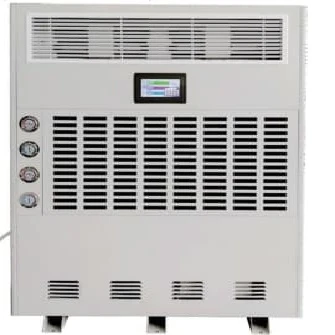
First, let’s ground this in how VRF actually works, because its limitations stem directly from its design. Unlike a standard split system that pairs one outdoor unit with one indoor air handler, or a forced-air system that pushes conditioned air through ductwork to every room, VRF uses a single large outdoor condensing unit connected to multiple indoor evaporator units via refrigerant lines. The system adjusts the flow of refrigerant (that’s the “variable flow” part) to match heating or cooling needs in each zone, so you can crank up the AC in the server room while keeping the conference room a mild 72 degrees in the winter. That zoning magic is why VRF looks so perfect on paper. But that interconnected design is its biggest weak point, too.
Take size and upfront cost, for starters. A standard 10-ton rooftop HVAC system for a small retail space might run $12,000 to $15,000 installed, right? The same 10-ton capacity VRF system? Last year, I quoted a 12,000-square-foot office building in Chicago for a new HVAC setup, and the client thought a $20,000 VRF quote was overpriced—until we broke it down, and it actually beat the forced-air system quote by $1,200. Wait, so why is that a limitation? Because upfront costs scale way differently for larger or more variable spaces. For buildings over 50,000 square feet—think big-box retail, multi-story office towers, or college dorm wings—you’re not just buying one outdoor unit. You might need two or three large condensing units, plus dozens of indoor air handlers, thermostats, and refrigerant line runs that snake through walls, ceilings, and even underground. The material and labor for that adds up fast: I installed a VRF system for a 60,000-square-foot industrial warehouse last year, and the total installed cost was $180,000—compared to a $110,000 quote for a high-efficiency forced-air system with air conditioning. The client needed zoning for 18 different production zones, so VRF was non-negotiable, but the upfront hit meant they took three years to recoup energy savings, whereas the forced-air system would have paid for itself in 18 months. That’s a big deal for building owners working on tight capital budgets, especially when you compare that to simpler, lower-cost alternatives that still meet their needs.
Then there’s that interconnected design I mentioned. If one part of a VRF system breaks, it doesn’t just affect that zone—it can take down the whole system, or at least a large chunk of it. Let’s say you have a VRF system for a 10-unit apartment building. The outdoor unit is on the roof, connected to 10 indoor air handlers in each unit. Last winter, a technician I work with was called to a building where Unit 3’s air handler had a refrigerant leak. To fix it, he had to isolate that unit, but the leak had already pulled enough refrigerant from the outdoor unit’s line set that the entire system lost pressure. Result? Not only was Unit 3 out of commission, but so were Units 2, 4, and 5—because the shared line set feeds multiple indoor units. That’s a huge headache for property managers who can’t afford to shut down four units just to fix one. Contrast that with a standard split system: if one indoor unit has a leak, you just shut down that one unit, and the rest keep running. I’ve also seen cases where a faulty outdoor unit component—say, a compressor motor—forces a full system shutdown for two days, because VRF compressors are custom-built for the exact size of the outdoor unit, and they take three to five days to ship from the manufacturer. For a retail store that relies on constant cooling during summer months, that’s lost sales, plain and simple.
Next up: installation complexity and long-term maintenance headaches. VRF systems aren’t as straightforward to install as forced-air, which has standardized duct sizing and line runs. Every VRF system is custom-engineered for the building it’s going into. That means on-site design, custom line set sizing, pressure testing, and calibration—steps that require specialized training, tools, and technicians who know how to work with refrigerant lines of varying lengths. Last year, I had a client who hired a small HVAC company to install VRF in their new 8,000-square-foot office. The company cut corners on line set sizing, using 3/8-inch lines for a zone that needed 1/2-inch to deliver enough refrigerant. Within six months, that zone had uneven cooling, and the system was running 20% higher than it should on energy. When we got called back to fix it, we had to pull out all the old lines, re-run the correct sized ones, and recalibrate the entire outdoor unit—costing the client $8,000 out of pocket, because the original installer didn’t stand behind their work. That’s not an isolated issue: improper VRF installation is one of the top complaints I hear from building owners, because a bad install turns a supposedly high-efficiency system into a money pit.
Then there’s maintenance. Traditional HVAC systems, especially forced-air, have easy-to-replace parts: air filters, blower belts, coil cleaners, basic electrical components. VRF systems? Most parts are proprietary—meaning they’re built by the manufacturer only, and you can’t buy a replacement compressor or control board from a local parts store. You have to wait for the manufacturer to ship it, and you have to use a technician certified by the brand to work on it. I had a client in Detroit last winter whose VRF system fan control board died on a Saturday, when the office was closed. The local HVAC tech couldn’t get a replacement board from the manufacturer until Monday morning, so the office was cold over the weekend and had to pay 12 hourly employees to come in for a few hours on Monday to warm the space before work started. That’s a $1,200 emergency cost, just because of a proprietary part. I also see clients skimp on maintenance, which leads to premature breakdowns. VRF systems require annual refrigerant leak checks, line set pressure tests, and indoor coil cleaning—tasks that take twice as long as basic forced-air maintenance, so they cost twice as much. For a small business that budgets $200 a year for HVAC upkeep, a $500 VRF maintenance bill every year is a hard sell, even if the system is more efficient.
Wait, but what about energy savings? Isn’t that the big selling point of VRF? It is, when it works as designed. But there are cases where VRF actually uses more energy than traditional systems, and that’s tied to its load matching and zoning capabilities. VRF systems are most efficient when they’re running at partial load—meaning when only a portion of the indoor units are active at once. If you have a VRF system that’s sized too large for the space, it will cycle on and off more frequently, which is less efficient than a properly sized system that runs at a steady load. I’ve had a few clients who ordered a VRF system “for future growth” that was 20% over their current building size, and their energy bills went up by $300 a month within a year. Why? Because the oversized compressor is burning energy to cool air that’s recirculating through unoccupied zones, or cycling on and off constantly instead of running at its optimal efficiency. Traditional forced-air systems, by contrast, are less finicky about over-sizing—they just have a small bit of extra capacity that’s easy to adjust with a filter or duct damper.
Another limitation I don’t see talked about much is refrigerant type and regulatory changes. Most commercial VRF systems use R-410A refrigerant, which is a hydrofluorocarbon (HFC) that’s being phased out globally because of its high global warming potential (GWP). The EPA’s phase-down of HFCs in the U.S. means that by 2035, manufacturers will no longer produce R-410A, and by 2050, it will be banned entirely. VRF systems are starting to transition to lower-GWP refrigerants like R-32 or R-454B, but those new refrigerants are more flammable, require specialized handling and equipment, and are more expensive to service. Last year, I had a client who had a VRF system installed in 2018 with R-410A, and when he needed a repair, the technician had to confirm he was certified to handle that specific refrigerant, because the rules changed in 2022. For building owners who plan to be in their space for 15 to 20 years, that means they’ll have to pay to retrofit their VRF system to use the new lower-GWP refrigerant or replace parts that aren’t compatible with the new refrigerant—an extra cost that wasn’t included in their original VRF quote. That’s a hidden long-term limitation that a lot of sales reps gloss over.
Let’s not forget about noise, either. VRF systems are marketed as quiet, and they are—if the indoor units are properly installed. But if you put an indoor air handler in a tenant space that’s open to office areas or hotel lobbies, even a small amount of line set vibration or fan noise can be noticeable. Last year, I worked on a boutique hotel in Cleveland where VRF indoor units were installed in the hallways, and guests complained about a low humming noise that was only noticeable when they were trying to sleep. The issue was that the line sets were not properly isolated from the ceiling joists, so the vibration from the refrigerant flow was being transferred through the building structure. We had to add vibration dampers to the line sets and re-calibrate the indoor units, which cost the hotel $3,000 and took three days of work. Compare that to a standard split system with indoor units—most of those are designed to mount on walls or ceilings with vibration dampers built in, so you rarely get that kind of structural noise transfer.
Now, I want to be clear: I’m not bashing VRF systems. They’ve solved a lot of problems that older HVAC systems couldn’t, especially for multi-tenant spaces where zoning is non-negotiable. The ability to cool a server room 24/7 while keeping a coworking space at a comfortable temperature during business hours is a game-changer for many clients. But they’re not perfect, and every commercial building should do a thorough analysis before choosing VRF over alternatives like high-efficiency forced-air, variable air volume (VAV) systems, or even ductless mini-splits for smaller spaces. As a supplier, my job isn’t just to sell a system—it’s to match the right system to the building’s needs, budget, and long-term plans. If a building only has one large zone and a tight upfront budget, I’ll recommend forced-air, even if VRF has better marketing. If a building has 10+ zones with varying cooling and heating needs, VRF is probably the right call, but I’ll also walk them through the limitations they’ll face down the line.
If you’re a building owner, facilities manager, or contractor who’s evaluating HVAC systems for a commercial space, and you want to talk through whether VRF is the right fit, or learn more about how to mitigate its limitations if you already have a VRF system, don’t hesitate to reach out. We work with clients across the commercial sector to deliver reliable, efficient HVAC solutions tailored to their unique needs, and we’re happy to provide honest, no-pressure consultations.
Magnetic Chiller References
ASHRAE. (2021). HVAC Applications Handbook: Commercial Systems. American Society of Heating, Refrigerating and Air-Conditioning Engineers.
Air Conditioning Contractors of America (ACCA). (2022). Commercial VRF System Design and Installation Best Practices. ACCA Publications.
U.S. Environmental Protection Agency (EPA). (2023). Phase-Down of High Global W Potential Hydrofluorocarbons. EPA Ozone Protection and Synthtic Greenhouse Gas Management Program.
Hangzhou Dayu HVAC Engineering Co., Ltd.
As one of the most professional commercial hvac system manufacturers and suppliers in China, we have world-leading production equipment and strong manufacturing capabilities. If you’re going to buy customized commercial hvac system made in China, welcome to get quotation from our factory. For price consultation, contact us.
Address: Room 1004, Building 1, Xicheng Business Tower, Xihu District, Hangzhou City, Zhejiang Province, China
E-mail: info@hi-hvac.com
WebSite: https://www.hi-hvac.com/
