If you’ve ever been part of an AAC (Autoclaved Aerated Concrete) production line, you know how critical the Turning Cutting System is—it’s the machine that transforms raw AAC blocks into precise, usable shapes, whether for walls, floors, or prefab elements. As a supplier of these systems, I’ve spent thousands of hours working with logistics teams, production managers, and plant operators to get these heavy, sensitive pieces of equipment from our workshop to their final home without a single hiccup. This isn’t just about loading a machine onto a truck; it’s a process that balances engineering precision, safety regulations, and long-term equipment performance. Today, I’m breaking down exactly how we approach transporting an AAC Turning Cutting System, based on years of hands-on experience. AAC Turning Cutting System
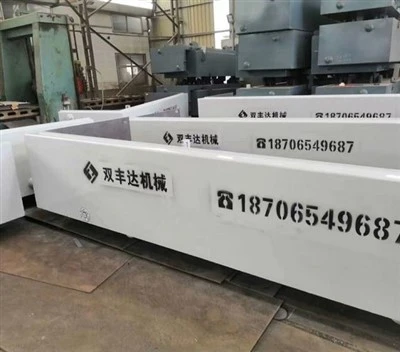
First, let’s set the context: an AAC Turning Cutting System isn’t a small office appliance. It’s a large, steel-heavy rig, with moving parts that include cutting blades, turning gears, and alignment rails. Depending on the model, it can weigh anywhere from 12,000 to 35,000 kilograms, with dimensions stretching 8 to 15 meters in length, 2.5 to 4 meters in width, and 3 to 5 meters in height. Even the smallest misstep here—like improper load securance, ignoring weight distribution, or skipping pre-transport inspections—can lead to bent blades, misaligned gears, or even structural damage that halts a new production line before it even starts. That’s why every step of the process is non-negotiable for us.
The first phase, and the one that almost makes or breaks the whole transport job, is pre-transport preparation. Too many teams skip this step, relying on generic “heavy equipment transport” checklists, but we’ve tailored ours specifically for AAC Turning Cutting Systems. Two weeks before any scheduled pickup, our field service engineers run a full on-site inspection of the system. This isn’t just a quick visual check—we disconnect all hydraulic lines, drain residual fluid to prevent leaks during transport, and label every electrical connector with color-coded tags so no one mixes up wiring during reinstallation back at the plant.
We also take extra care with the precision components. The cutting blades, for example, are hardened steel, sharp enough to cut through AAC like butter, but brittle if dropped or jostled. We remove them entirely for transport, wrap them in heavy-duty foam padding, and secure them in wooden crates lined with shock-absorbent material. The alignment rails, which need to be perfectly straight for the system to function, get covered in a custom foam sheath and then bolted to the main frame of the machine—no loose parts allowed. We even run a laser alignment test before disassembly, record the readings, and include those documents in the transport package; when the system arrives, the local engineers use those exact numbers to get the line back up and running in half the time.
Next, we handle logistics and route planning. AAC Turning Cutting Systems are oversized loads, which means they don’t fit on standard flatbed trucks. We work with specialized heavy haulers that have experience moving industrial manufacturing equipment, not just construction vehicles. But route planning isn’t just about finding a truck that can carry the weight. We check for low overpasses, narrow bridge clearances, and weight limits on local roads—some small rural roads in parts of North America and Europe have strict axle weight limits that would require a special permit for a 35,000 kg load. We also account for the time of year: if a load is moving through a region with heavy winter snow, we schedule it for spring or fall to avoid delays caused by icy roads or closed highways.
One of the common mistakes we see from first-time buyers is underestimating the need for permits. In many countries, oversized loads require advance notification to transportation authorities, sometimes 30 to 60 days before transport. The permit process includes submitting detailed load dimensions, weight, and route maps, as well as proof of insurance. We never leave this to the customer—our logistics team handles all permit applications and ensures every document is in order before the truck even arrives at our workshop. That’s how we avoid last-minute holds at state borders or roadblocks that can push delivery dates back by weeks.
Once the truck and route are confirmed, the loading phase comes next. This is where specialized equipment is non-negotiable. We don’t use a standard forklift to load a 20,000 kg Turning Cutting System—we rely on hydraulic cranes with a lifting capacity matched to the machine’s weight. The key here is proper lifting points, which we mark clearly on the frame during manufacturing. Trying to lift the system from unmarked areas can bend the steel frame, ruining the structural integrity of the machine. We also use spreader bars to distribute the weight evenly across the crane’s lifting slings, which prevents damage to the machine’s top rails.
Securing the load on the flatbed is another step that demands precision. We use both steel chains and rubberized straps to anchor the Turning Cutting System to the truck’s tie-down points. We space the chains evenly along the machine’s frame—never just at the ends—to avoid uneven tension that could warp the steel during transport. We also add dunnage (wooden blocks) between the machine and the flatbed to absorb any vibration from the road. For the smaller components, like the removed cutting blades and electrical connectors, we place them in weather-sealed wooden crates that are bolted to the truck’s front section, so they don’t shift during transit.
During transport, our logistics team tracks the load in real time. Every driver we partner with has a device that sends live updates of the truck’s location, speed, and route to our office, and we check these updates daily. If there’s a detour, or a delay due to weather, we notify the customer immediately, so they can adjust their production schedule accordingly. We also require drivers to do a formal inspection of the load every 200 km, checking that chains are tight and straps are secure. On long hauls (over 1,000 km), we even schedule a mid-journey stop with a second inspection, just to be extra safe.
When the truck arrives at the customer’s plant, the unloading phase is just as important as loading, and we always recommend that our customers have a team from our local field service crew on-site for this step. Unloading uses the same crane and spreader bar as loading, but we take time to align the machine with the plant’s foundation. The Turning Cutting System needs to sit on a level concrete pad, and we use a laser level to ensure it’s perfectly aligned—even a 2-degree tilt can affect the accuracy of the cuts. Once the machine is in place, our engineers help uncrating the precision components, reinstall the cutting blades, and connect the hydraulic and electrical lines, following the pre-transport alignment readings we recorded.
Over the years, we’ve learned that the best way to transport an AAC Turning Cutting System isn’t to cut corners—it’s to treat every step with the same care we’d use for a machine that stays in our own workshop. We’ve had customers who tried to use a regular freight company and ended up with a bent alignment rail that cost thousands in repairs and delayed their plant startup by a month. We’ve also had customers who followed our process closely, and their systems arrived ready to run, with no extra work needed.
If you’re planning to add an AAC Turning Cutting System to your production line, or if you’re replacing an old one, don’t leave transport to chance. The right logistics and preparation can make the difference between a smooth startup and a costly headache. Our team has worked with plants across the globe, and we know how to tailor every transport plan to your location, equipment model, and timeline. Reach out to our team to discuss your AAC Turning Cutting System transport needs, and we’ll walk you through every step to ensure your machine arrives safely and on time.
Aerated Concrete Block Packaging Line References
- Industrial Truck Association. (2022). Best Practices for Heavy Industrial Equipment Loading and Securement. Retrieved from industry guidelines for heavy haul transport operations.
- Autoclaved Aerated Concrete Manufacturers Association. (2021). Guidelines for Handling and Installing AAC Production Machinery. Retrieved from technical standards for AAC plant equipment.
- Federal Motor Carrier Safety Administration. (2020). Oversized Load Permitting and Route Planning for Commercial Vehicles. Retrieved from U.S. Department of Transportation regulations for heavy haul transport.
- International Organization for Standardization. (2019). ISO 10135: Handling and Transport of Industrial Manufacturing Equipment. Retrieved from ISO technical standards for equipment logistics.
Qingzhou Shuangfengda Machinery Engineering Co., Ltd.
As one of the most professional AAC turning cutting system manufacturers and suppliers in China, we’re featured by quality products and good price. Please rest assured to buy durable AAC turning cutting system for sale here from our factory. Customized orders are welcome.
Address: Gaojiazhuang Village, Gaoliu Town, Qingzhou City, Shandong Province
E-mail: lenhond@163.com
WebSite: https://www.sfdmachinery.com/
