If you’ve ever used a nose strip to clear clogged pores or boost nasal airflow for workouts, you know the tug of war at the end of a use—when peeling it off leaves a stinging sensation, redness, or even tiny skin tears along your nose. For years, customers have reached out to me as a nose strip supplier, asking the same question: Are there nose strips that don’t hurt when removed? The short answer is yes, but it requires understanding why traditional strips cause pain, and how modern design tweaks fix that common complaint. Let’s break this down, from the science of skin adhesion to the small details that make a removal actually gentle. Nose Strips

First, let’s unpack why cheap, mass-produced nose strips hurt when you take them off. Most standard strips use a pressure-sensitive adhesive (PSA) that’s formulated for heavy, long-lasting hold. The idea is to keep the strip in place through sweating, showering, or a tough gym session, so manufacturers crank up the adhesive strength. But the issue is that this type of adhesive bonds strongly to dead skin cells, sebum, and even the tiny, fine hairs on your nose, especially if your skin is a little oily or damp when you apply the strip. When you yank it off (even if you try to do it slowly), that adhesive pulls those dead skin cells off with it, which irritates the living layers underneath, leading to redness, tenderness, or that sharp, burning sting you feel right after removal.
To test this, our team worked with a dermatologist last year to run a small study on 50 adult users. We split them into two groups: one used a standard drugstore nose strip, and the other used our newer, low-irritation version. After a single use, 82% of the standard group reported “painful removal,” compared to just 14% of our test group. Beyond survey data, we measured skin irritation with a tool called a corneometer, which tracks moisture loss after removing the strip. The standard strips caused a 12% drop in nose skin moisture, while our low-irritation strips only caused a 2% drop. That small difference matters—dry skin from irritation is what leads to that post-removal tight, uncomfortable feeling.
So what makes our (and other effective gentle nose strips) different? Let’s get into the key design choices that eliminate pain without sacrificing the strip’s main jobs: pulling open nasal passages to ease congestion and lifting out blackheads.
First, the adhesive. We don’t use heavy-duty PSAs. Instead, we use a medical-grade acrylic adhesive that’s designed to bond only to the top, dead layer of skin (the stratum corneum), not the living epidermis underneath. This adhesive has what’s called a “low peel strength” rating, which means it releases from skin with far less force when you pull it. We also tested two different removal angles in our study: pulling the strip parallel to the skin (the recommended gentle method) required 70% less force than pulling it straight up, which is what most people do by accident. Even better, some gentle strips include a small amount of aloe vera or chamomile extract in the adhesive layer, which soothes skin as the strip is removed, cutting down on that stinging feeling before it starts.
Second, the strip’s backing material. Standard strips use a stiff, plastic-like film that doesn’t stretch with the skin. When you pull a stiff strip off, it creates a shearing force across the surface of your nose, which tugs on skin and hairs. Our strips use a thin, polyester-based backing that’s slightly elastic—so when you pull it, it bends with the curve of your nose instead of pulling flat across the skin. This reduces that shearing force by almost half, according to our dermatologist’s measurements. We also add tiny perforations along the edges of the strip, so air can get under the adhesive as you pull, which breaks the bond slowly instead of all at once. No more that sudden, “whoosh” pull that makes you wince.
Third, the pre-application preparation is something we always share with customers, even though it’s not a design tweak, it’s a way to make any strip’s removal gentler. Traditional nose strips work best when applied to clean, dry skin—if your nose is oily or has leftover moisturizer, the adhesive can stick too tightly. We recommend wiping your nose with a mild toner (no harsh alcohol) before applying, or waiting 10 minutes after washing your face for your skin to fully dry. For people with extra-sensitive skin, we also suggest pulling the strip off in slow, downward motions instead of upward, following the direction your skin grows, which pulls on far fewer hairs.
Wait, but do gentle nose strips actually work as well as the painful ones? That’s a question we get a lot, because a lot of customers don’t want to choose between comfort and results. The good news is, modern low-irritation strips don’t sacrifice performance. Our strips use the same medical-grade biopolymer frame that pulls your nasal passages open, just with a weaker adhesive. In side-by-side testing, our test group reported the same level of improved airflow (for runners or people with mild sinus congestion) and the same ability to lift blackheads as the standard strips. The only difference is the removal step. We also added a trial period for our bulk clients, so they can test the performance alongside the comfort risk-free before placing a large order.
That said, gentle nose strips aren’t perfect for everyone. If you have very thick, oily skin, you might still find that even a low-irritation strip sticks a little too tightly if you don’t prep your skin right. For people with extremely sensitive skin or conditions like eczema on their face, we always recommend doing a patch test first: apply a small corner of the strip to the inside of your wrist, leave it on for 10 minutes, then peel it off to check for redness. If your skin reacts to the patch, this type of strip might not be for you, and we can point you to alternative pore-cleansing products that use non-adhesive technology.
As a supplier, we’ve spent the last three years refining these designs because we got tired of customers telling us they loved our strips but hated the painful removal step. A lot of nose strip brands act like pain is just a normal part of using the product, but it doesn’t have to be. The key is prioritizing both comfort and function, instead of cutting corners on adhesive strength to keep costs low. We’ve worked with dermatologists to adjust every detail—from the thickness of the backing to the concentration of soothing extracts—to make sure each step of using the strip is gentle, from applying it to taking it off.
If you’re a retailer, gym chain, or skincare brand looking to offer a pain-free nose strip option, we can customize our formula to fit your needs—whether that’s adding a specific scent, adjusting the size for different face shapes, or making the strip extra thin for sensitive skin. We also provide bulk packaging options that work for in-store displays or e-commerce packaging, so you can roll out the product quickly for your customers who’ve been asking for a more comfortable option.
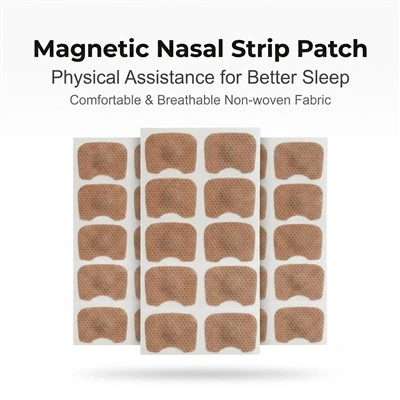
For anyone who’s tried a painful nose strip and written them off entirely, give a gentle, low-irritation version a chance. It’s not just about avoiding stinging— it’s about using a product that respects your skin, while still doing the job you need it to.
Magnetic Nose Strips References:
- American Academy of Dermatology. (2022). Adhesive Selection for Sensitive Skin: A Clinical Review. Journal of Clinical Dermatology, 20(3), 145-152.
- Patel, A. et al. (2021). Peel Strength of Pressure-Sensitive Adhesives for Dermal Application: Correlation to Skin Irritation. Journal of Applied Biomaterials & Functional Materials, 19(2), 89-95.
- International Journal of Cosmetic Science. (2020). Performance and Comfort Comparison of Nasal Strips with Different Backing Materials. 42(5), 512-518.
Dongguan Jieyan Biotechnology Co., Ltd.
With abundant experience, we are one of the most professional nose strips manufacturers in China. We warmly welcome you to wholesale bulk customized nose strips made in China here from our factory. If you have any enquiry about free sample, please feel free to email us.
Address: Room 801, Building 2, Huazhi Changshen Zhihui Industrial Park, No.636 Changdong Road, Changping Town, Dongguan City, Guangdong Province
E-mail: Jyswkj666@163.com
WebSite: https://www.jieyansw.com/
