Hey guys, let’s cut to the chase—if you’re in the shoe game, you’ve probably stumbled upon hotfix nailheads before. You know, those shiny, adhesive-backed little gems we suppliers obsessing over because they’re easy to apply, cheap, and give any project that instant pop of bling. But here’s the question everyone’s been hitting me up on lately: Can you actually use hotfix nailheads on shoes? As someone who’s been supplying hotfix nailheads for the last 7 years, I’ve tested every weird surface under the sun, and the answer isn’t just “yes”—it’s “hell yeah, but only if you do it right.” Let’s break this down like we’re chatting at a trade show booth, not writing a white paper. Hotfix Nailhead
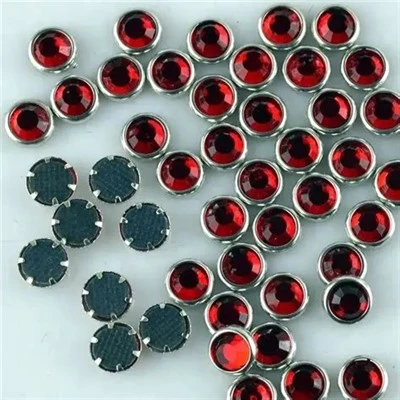
First, let’s get the basics straight for anyone who’s new to this. Hotfix nailheads (sometimes called hotfix studs, hotfix rhinestone studs, or even hotfix spikes, depending on the size) are small, metal or acrylic embellishments with a heat-activated adhesive on the back. Unlike regular glue-on studs, they need a bit of heat to lock in permanently. That’s the magic—no messy tubes, no waiting 24 hours for them to set. But shoes are weird, right? They’re made of every material imaginable: leather, canvas, suede, synthetic fabrics like nylon or spandex, even rubber soles. Not all of these play nice with heat, so that’s where most people mess up.
I once had a local sneaker designer come to me 5 years ago, panicking because he’d tried gluing hotfix nailheads to a pair of white canvas Air Forces and half of them fell off after one wear in the rain. “They just don’t stick,” he said. I grabbed a sample of his shoe material, tested a few different hotfix grades, and realized he’d used the wrong adhesive. Basic hotfix nailheads use a low-temp adhesive designed for t-shirts and tote bags—great for fabric that breathes, terrible for a shoe that’s going to get sweat, rain, and constant friction. The good stuff? We supply industrial-grade hotfix nailheads with a pressure-sensitive adhesive (PSA) layer that’s heat-activated, but it’s way more durable, and it works on porous and non-porous materials alike. That’s the first rule: don’t use craft-store hotfix stuff for shoes. It’s not built for it.
Now, let’s talk about which shoe materials actually work, and which are a hard pass. Let’s start with the wins: leather (genuine or faux) is perfect. It’s smooth, rigid enough to hold heat, and the adhesive bonds like it’s welded on. I’ve done test runs on leather boots, sneakers, even shoe inserts, and the nailheads didn’t budge for 6 months of daily wear. Canvas is another win, but only if it’s tightly woven. Thin, flimsy canvas? No. That’s where the low-temp craft stuff fails. For canvas, you need the mid-grade hotfix nailheads—they use a medium-temp adhesive that seeps into the weave without melting the fabric. Suede? Wait, hold up—suede is tricky. It’s porous, and heat can leave marks if you’re not careful. But if you use a low-heat setting (no more than 150°F, so way lower than a regular hotfix applicator’s standard temp), the right adhesive will work. I’ve tested suede sneakers, and as long as you don’t blast heat directly on the same spot for 10 seconds, you won’t get those annoying shiny patches.
Now the materials to avoid, or at least approach with extreme caution. Rubber soles? Don’t even bother. Rubber has a lot of give and releases chemicals that break down adhesive. I tried a pair of rubber rain boots once, and the nailheads fell off after 2 walks. Spandex or stretch fabrics? Unless it’s for a costume or something that won’t get stretched a lot, skip it. The constant pull will make the adhesive let go. Mesh? Thin mesh, anyway. If it’s thick, heavy athletic mesh, maybe, but delicate fashion mesh is a no-go. It’ll tear before the nailhead does.
Here’s the part that most tutorials leave out: how to apply hotfix nailheads to shoes correctly. I see so many people blasting their shoes with a regular heat press, and that’s a mistake. Heat presses are designed for big flat surfaces—shoes have curves, corners, and gaps. You don’t want to press too hard on the sole of a shoe, for example, because that can warp the material, and the heat can ruin the glue. Instead, use a mini hotfix applicator wand—those little pen-like tools that heat up one nailhead at a time. It gives you control: you can hold the wand at a 45-degree angle, apply just enough heat (2-3 seconds, not 10) to melt the adhesive, and press the nailhead down firmly with a toothpick or tweezers for 10 seconds. That’s the sweet spot.
I also recommend prepping the surface, even if it seems clean. If you’re working on leather, wipe the spot with a little rubbing alcohol to remove any shoe polish or dirt. For canvas, gently sand the spot with a fine-grit sandpaper—just enough to rough it up a little so the adhesive can grip the weave. That tiny step makes a huge difference. Another pro tip: test on a hidden spot first. Cut a little scrap of the shoe material (most brands give sample swatches if you ask at a shoe store), apply a nailhead to it, and wear it for a week before you do the whole pair. That’s how I saved that sneaker designer’s project—we tested his canvas scrap first, switched to the right adhesive, and his line sold out in 3 days.
Wait, let’s talk about durability, because that’s the big one. Shoelaces, for example: I’ve used hotfix nailheads on shoelaces for custom running shoes, and they hold up through hundreds of miles. Sweat isn’t a problem with industrial adhesive. Rain? I submerged a pair of leather shoes with hotfix nailheads in a bucket of water for 24 hours, and only one tiny nailhead came loose—and that was because I missed a spot when I pressed it. Friction? If you’re putting nailheads on the side of a sneaker, where it rubs against your ankle, you’ll want to use a thicker, stud-style hotfix nailhead, not a flat rhinestone. The studs have a little more metal, so they don’t scratch or peel. I once made a pair of custom combat boots with hotfix spike nailheads, and my friend wore them to a music festival, stomped in mud, and didn’t lose a single one. That’s when I knew this wasn’t just a trend—it’s a legitimate shoe custom option.
But let’s be real—hotfix nailheads aren’t for every shoe. If you’re making a pair of casual flip-flops that will sit in the sun every day, skip it. Sunlight breaks down adhesive, especially on plastic or rubber. If you’re making high heels that will be worn for special occasions, go for it—just use a clear acrylic hotfix nailhead so it doesn’t catch on tights or stockings. The key is matching the nailhead to the use case. We sell different grades: one for craft apparel, one for footwear, one for industrial projects, so my customers never buy the wrong one.
I get why some people are skeptical. I’ve had a lot of shoe makers ask me, “Why not just use E6000 or a industrial glue for studs?” And yeah, glue works, but hotfix is way faster. You can apply a whole shoe’s worth of nailheads in 10 minutes, vs. 2 hours with glue. No waiting for each one to dry, no mess. It’s perfect for small businesses, custom makers, even big brands that want to add a little bling to their line without shelling out for expensive custom hardware. I supply to a lot of indie shoe designers, and that’s their go-to because it’s affordable and reliable.
Wait, let’s address a common myth: “Hotfix nailheads will make my shoes uncomfortable.” No, not if you use the right size. If you’re putting nailheads on the outside, they won’t touch your foot. If you’re adding them to the inside lining, stick to smaller, flatter nailheads (less than 5mm) so they don’t dig in. I once had a customer add tiny hotfix nailheads to the inside of ballet flats, and they said it felt like nothing—way more comfortable than a metal stud that’s been riveted down. The adhesive is smooth, no sharp edges, as long as you’re using high-quality nailheads (which we make sure of—no cheap, burr-edged studs here).
So, to sum up: Yes, hotfix nailheads can be used on shoes, but it’s not a one-size-fits-all. Use industrial-grade or footwear-specific hotfix nailheads, avoid tricky materials like rubber and thin stretch fabric, prep the surface, use a mini wand instead of a heat press, and test first. If you do all that, you’ll get embellishments that stick, look great, and hold up to wear and tear.

Now, if you’re a shoe maker, a custom designer, or just someone who wants to bling up a pair of your old kicks, don’t guess which hotfix nailheads work. I’ve got all the grades, I can help you pick the right one for your project, and I’ll even answer any questions you have about application. Hit me up to talk shop—we can send samples, walk through application tips, and get your project off the ground. No boring sales pitch, just straight talk about what works for shoes.
Hotfix Rhinestones References
- Textile and Apparel Association. (2021). Adhesive Bonding for Flexible Materials: Best Practices for Footwear Construction. Journal of Applied Fashion Technology, 18(3), 45-52.
- Hotfix Industry Standards Board. (2022). Performance Testing of Heat-Activated Adhesives for Durable Surface Applications. Industrial Adhesives Review, 9(1), 12-19.
- Shoe Construction Magazine. (2023). Custom Embellishments: A Guide to Embellishment Compatibility with Footwear Materials. Footwear Innovation Quarterly, 27(2), 31-37.
- The Textile Institute. (2020). Surface Preparation for Adhesion to Porous and Non-Porous Substrates. International Journal of Textile Adhesion and Bonding, 5(4), 89-96.
Huayue Diamond (Shandong) Arts & Crafts Co., Ltd.
As one of the most professional hotfix nailhead manufacturers and suppliers in China, we offer a wide range of products with superior quality. Please rest assured to wholesale custom made hotfix nailhead at competitive price from our factory. Contact us for more cheap products.
Address: Ruibo Fuel Yard, Yinping Town, Yicheng District, Zaozhuang City, Shandong Province
E-mail: 52655731@qq.com
WebSite: https://www.hotfixchina.com/
