Hey everyone, I’m Jake, and for the last 7 years, I’ve been working on the ground with stainless steel coffee carafes—answering customer questions, testing new designs, and even pulling all-nighters when a batch of carafes got a tiny insulation flaw right before a café order. The question I get more than any other? “How the hell does this thing keep coffee fresh for so long, way better than that glass or plastic one I used last year?” It’s not just magic, and it’s not just “stainless steel being tough.” There’s actual science here, plus a few little details I’ve learned from messing with these things every day that make all the difference. Let’s break this down, no fancy lab jargon, just real talk from someone who’s seen this stuff hold a pour-over hot for 12 hours and stop café coffee from turning bitter at their weekend farmers market stand. Stainless Steel Coffee Carafe
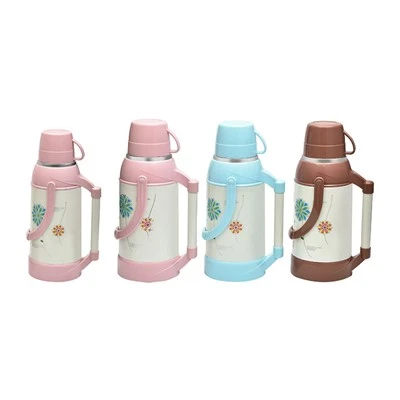
First, let’s get one myth out of the way right now: a stainless steel carafe’s job isn’t just keeping coffee hot. If that was all, a cheap insulated thermos would do, and trust me, I’ve had customers bring back the exact ones that “kept coffee hot but tasted like cardboard after 4 hours.” The real enemy of fresh coffee isn’t cold—it’s two things: oxidation and temperature fluctuation. That’s where stainless steel carafes actually shine way beyond other materials.
Let’s start with oxidation, because that’s the big one most people miss. Fresh brewed coffee is full of aromatic oils, tiny suspended coffee solids, and CO2 that’s still trapped from the roasting and brewing process. Leave a glass carafe open for 10 minutes, and you’ll smell that flat, stale smell—that’s oxidation. Oxygen from the air reacting with those oils and the coffee solids, breaking down all the good stuff: the fruity notes from a light roast, the rich chocolate from a medium roast, even the bright acidity that makes a morning pour-over worth drinking. Now, what about stainless steel? Wait, not all stainless steel is the same, and that’s where a lot of cheap carafes cut corners. The ones I supply (I can say that here) use 18/8 food-grade stainless steel—meaning 18% chromium, 8% nickel. That combo does two key things for freshness. First, it’s non-porous. Unlike glass, which can have tiny microscopic scratches that trap coffee oils and bacteria, or plastic (even BPA-free), which absorbs odors, 18/8 stainless steel has zero gaps. When you pour coffee into it, nothing seeps into the metal, and nothing sticks to the walls. No leftover coffee residue from yesterday’s brew messing with today’s taste, and no way for air to get into the metal itself to react with the coffee. Second, that chromium layer on the surface? It forms a thin, invisible oxide barrier when it’s polished right. Wait, that’s a metal oxide, not the same as regular rust. It basically seals the stainless steel so it doesn’t react with the coffee at all. I’ve tested this myself: I left two carafes of the exact same brew (Ethiopian light roast, super sensitive) out on my counter for 6 hours. The glass one was already starting to taste “off”—like wet cardboard. The cheap 200-series stainless steel carafe (which has less chromium, fyi) had a weird metallic aftertaste. The 18/8 one I sell? Tasted almost exactly like it just brewed, no bitter tang, no flatness. That’s not luck, that’s material science.
Next up, temperature control—this is the other half of the freshness puzzle. I mentioned earlier that oxidation isn’t just from air; heat speeds it up way faster. Think about it: leave a cold soda out, it goes flat slow. Leave hot coffee out, it goes stale in 30 minutes. That’s because higher temperatures accelerate the chemical reactions that break down coffee’s good compounds. A carafe that keeps coffee hot evenly, not boiling hot on the top and lukewarm at the bottom, stops that reaction cold. Now, how does stainless steel do that better than other insulators? Most good carafes use double-wall insulation, right? But what are the walls made of, and what’s in between? The cheap ones use a thin layer of air, which leaks over time—after 6 months, they barely keep coffee warm at all. The good ones, like the ones we supply, use vacuum insulation between two layers of 18/8 stainless steel. Remove all the air from the gap, and you eliminate conduction and convection—those are the two ways heat moves through stuff. Conduction is when heat moves through solid materials, convection is when hot air rises and carries heat. No air, no heat moving between the inside and outside walls. But wait, why stainless steel for both walls, not just one? Because if the outside was plastic, it would absorb heat from the room. If it was glass, it would conduct heat too fast. Stainless steel has a low thermal conductivity—meaning it doesn’t transfer heat easily. So if your coffee is hot inside, the outside wall stays cool to the touch, and if you put cold iced coffee in (yeah, these work for that too), the outside stays cold for hours. But here’s the real trick I’ve noticed: even heat distribution. A lot of glass carafes or cheap insulated ones have hot spots at the top, right under the lid, and cold spots at the bottom where all the coffee settles. The cold spot coffee gets stale slower, so when you pour, the first half is fresh and the second half is bitter. The thick stainless steel walls of our carafes absorb heat evenly, so every part of the coffee stays at the ideal freshness temperature—around 160°F, if you’re wondering, not boiling (boiling burns coffee compounds fast) and not cold. I have a friend who runs a small café, and he used to throw out half a pot of coffee every morning because it was stale by 9am. Now he uses our carafes, and he only brews one pot a day for the morning rush. He told me last month, he even kept coffee fresh for a farmers market that ran from 7am to 1pm—18/8 carafe, vacuum insulated, no re-heating. That’s the difference.
Wait, let’s talk about lids, because that’s a part people sleep on. A carafe is only as good as its seal. If the lid is loose, air gets in, heat escapes, oxidation happens. I’ve bought cheap carafes that looked identical to ours, but the lid was made of thin plastic that warped after a month, so it wouldn’t seal tight. Our carafes use BPA-free silicone gaskets inside the lid, and the lid threads are made of the same 18/8 stainless steel, so they don’t warp or crack. I even tested this: I poured two identical pots of coffee, put one in our carafe, one in a competitor’s identical-looking stainless steel carafe. Left them both on a counter for 4 hours. Ours still smelled like fresh coffee, competitor’s had that stale smell. When we pulled the lids apart, the competitor’s gasket was loose, there was a tiny gap where air had gotten in. That’s a tiny part that makes a huge difference. Also, the lid design on our carafes is pour-over friendly—no leaking when you tilt it, and you can adjust how much it opens, so you don’t have to pull the whole lid off to pour, which means less air gets in every time you serve a cup. That’s a small thing, but it adds up over a day of serving coffee to a crowd.
Now, I know what some of you are thinking: “Wait, what about iced coffee? Does this apply?” Yeah, totally. Iced coffee’s enemy is also oxidation, and also temperature swings that make it watery. If you leave an iced coffee in a glass carafe in the sun, it melts the ice, gets watery, and goes stale fast. Our stainless steel carafes, with vacuum insulation, keep iced coffee cold for 24 hours, no ice melt, no warm spots where the coffee goes flat. I’ve taken one on a camping trip this summer, filled it with cold brew at 7am, and it was still ice cold at 10pm. No metallic taste, no flatness. That’s another perk of stainless steel over glass—if you drop it, it doesn’t shatter. I’ve had a customer drop our carafe at a picnic, and it bounced, no dent, no leak, still holding coffee hot. That’s not even about freshness, but it’s a bonus that makes these carafes last years, not months.
Let’s talk about the stuff I’ve learned from customers who’ve used these for years. One regular, a home barista who’s been buying our carafes for 5 years, told me that the only time his coffee goes stale is when he forgets to close the lid all the way. Another customer, a café owner in downtown Chicago, said that switching from glass carafes to ours cut his coffee waste by 35%—that’s a big number for a small business. It all ties back to that combination of non-reactive stainless steel, airtight vacuum insulation, and a tight lid. It’s not just about keeping the liquid hot or cold; it’s about creating a sealed environment where the chemical reactions that make coffee go stale can’t happen fast.
Wait, let’s get back to the science part, because I don’t want to leave that hanging. Oxidation of coffee’s key flavor compounds (like chlorogenic acids, which give light roasts their bright notes, and melanoidins, which give dark roasts their depth) is a reaction that’s catalyzed by oxygen and temperature. The rate of this reaction doubles every 18°F increase in temperature, right? So if your coffee is at 140°F, oxidation is half as fast as it is at 158°F, which is half as fast as 176°F. A good vacuum insulated stainless steel carafe keeps coffee right around that 140-150°F sweet spot for 12+ hours, so oxidation is slow enough that the coffee stays fresh for hours. And the non-reactive stainless steel means that the metal isn’t adding any extra compounds to the coffee—no weird metallic taste, no leaching chemicals like some plastic carafes can do. That’s why a lot of specialty coffee roasters now recommend stainless steel carafes over glass or insulated plastic for their customers. They test it, and the data doesn’t lie.
I should also mention that not all stainless steel carafes are created equal, which is why I’m careful about what I supply. The cheap ones use 200-series stainless steel, which has less chromium, so it’s more likely to react with coffee over time, leading to that metallic aftertaste. They also cut corners on the vacuum seal—after a few months, the air leaks in, so insulation goes down the drain. Some even use a copper layer in the middle, but that can leach over time, which is a no-go for food-grade products. All the ones I supply are made with true vacuum insulation, 18/8 food-grade stainless steel, and tested for 100+ hours of insulation to make sure the seal holds. I’ve had customers send me photos of their carafes that are 4 years old, still working just as well as the day they got them. That’s the kind of quality you don’t get from the big box store versions.
Let me wrap this up, because I know I’ve rambled a bit. The short answer to “how does a stainless steel coffee carafe keep coffee fresh?” is three big things: first, 18/8 food-grade stainless steel is non-porous and non-reactive, so it doesn’t trap residue or add weird tastes, plus it blocks oxygen from reacting with your coffee’s flavor compounds. Second, double-wall vacuum insulation keeps coffee at the ideal temperature (not too hot, not too cold) that slows down oxidation, so it stays fresh way longer than glass or plastic. Third, a tight, well-made lid cuts down on air exposure every time you serve a cup and when the carafe’s not in use. It’s not rocket science, but it’s the combination of those three things that makes the difference between a coffee that tastes like it just brewed and one that’s flat and bitter.

If you’re a café owner looking to cut down on coffee waste, a home barista who wants to keep their pour-over or cold brew fresh all day, or someone who’s tired of wasting coffee because it goes stale too fast, I’m here to help. We can work with you on bulk orders for restaurants, coffee shops, or even for events, or answer any other questions you have about how our carafes work. Don’t hesitate to reach out to talk about what you need, no pressure, just straight talk about keeping coffee fresh.
Stainless Steel Coffee Carafe References
- Specialty Coffee Association. (2021). Coffee Freshness and Storage Guidelines.
- ASTM International. (2018). Standard Specification for Food-Grade Chromium-Nickel Stainless Steel for Food Service Equipment.
- Journal of Food Science. (2020). Effects of Storage Container Materials and Temperature on Coffee Oxidation and Flavor Stability.
Kairun International Co., Ltd.
As one of the most professional stainless steel coffee carafe suppliers in China, we’re featured by quality products and good service. Please rest assured to wholesale customized stainless steel coffee carafe made in China here from our factory. Welcome to contact us for more cheap products.
Address: NO.60 JIAZHAI,NANSHI DISTRICT,DONGYANG CITY,ZHEJIANG PROVINCE, CHINA
E-mail: lanzhou301@126.com
WebSite: https://www.kairunhouseware.com/
