Hey everyone, let’s cut to the chase. If you’ve ever wondered how seismometers hold up out in the middle of a desert—like, say, the Sonoran, Sahara, or even the Mojave—you’re not just asking about a cool piece of gear. You’re asking how we, as seismometer suppliers, make tools that work when conditions are so harsh, most electronics would melt, short out, or just plain quit. I’ve spent the last 12 years selling, installing, and tweaking these things in remote deserts, and let me tell you, it’s not just about slapping a sensor in the dirt. It’s a whole different game out there. Seismometer

First, let’s break down what a seismometer actually does, quick—no PhD jargon, promise. At its core, it’s a device that picks up tiny ground movements, right? Not just the big shakings we feel in earthquakes, but the little rumblings from tectonic plates shifting, even distant explosions or underground resource tests. But deserts don’t play nice with standard seismometers. Think 120°F during the day, dropping to 40°F at night. Sandstorms that can sandblast a plastic cover off in an hour. No grid power, no cell service most places, and ground that’s hard as concrete one day, loose as powder the next. So when we build units for these spots, we have to fix those problems before they even start.
Let’s start with the sensor itself. Regular seismometers use a mass on a spring, right? When the ground moves, the mass stays still (thanks to inertia), and the sensor measures that difference. But in deserts, temperature swings can mess with that spring. Metals expand and contract, so if the spring stretches when it’s hot and compresses when it’s cold, your readings get off—you might think there’s a small earthquake when there’s not, or miss a real one. That’s a huge issue for research teams or energy companies relying on accurate data. So what do we do? We use temperature-stabilized springs, mostly from titanium or nickel-iron alloys that barely change size with heat. We also seal the sensor in a hermetic chamber—airtight, no moisture, no dust getting in. Desert air might feel dry, but sand is like tiny, gritty sandpaper; get it inside the sensor’s working parts, and it’ll jam the mass or scratch the internal mirrors (wait, yeah, some modern seismometers use fiber optics instead of mirrors now, same idea). We also test every unit in a climate chamber that cranks from -20°F to 140°F for 72 hours straight before it leaves our warehouse. Last year, a client installed a batch of our desert units in the Sahara, and they told us three months later, not a single one had a temperature-related glitch. That’s way better than the old models they were using, which had a 15% failure rate in the first month.
Next up, power. Deserts are dead out when it comes to power lines. You can’t run a 120V cord 50 miles to the nearest town—costs more than the seismometer itself. So for off-grid desert setups, we mix two things: small solar panels and lithium-ion phosphate batteries. Wait, not just any lithium batteries—those regular phone ones can go bad in extreme heat, leak, or even catch fire. LFP batteries are way more stable, work from -4°F to 140°F, and hold charge for 5+ years. We size the solar panels for the worst case: if a sandstorm blocks the sun for 3 or 4 days, the battery has enough juice to keep the seismometer running. Last year, we had a client in the Australian Outback where dust storms were constant for a week; their system kept going, no data gaps. We also add a small power management board that turns off non-essential parts when it’s not detecting movement, so it doesn’t waste battery. That’s a trick a lot of cheap suppliers skip, but it makes all the difference in remote areas.
Then there’s the ground itself. Deserts have some weird ground: sometimes it’s solid bedrock, sometimes it’s loose sand or dry clay. If you just set a seismometer on top of sand, when the wind blows, the sand shifts, and that tiny movement gets picked up by the sensor as fake data. No research team wants to sift through weeks of readings full of wind noise. So we install the sensors in boreholes, usually 3 to 5 feet deep. Wait, why not deeper? Digging a 20-foot hole in hard desert bedrock costs way too much, and 5 feet is deep enough to get below the wind’s surface disturbances. For loose sand, we fill the borehole around the sensor with a cement mix that’s been adjusted for desert conditions—add a little extra sand so it doesn’t crack when it heats up, and seal the top with a metal cap to keep sand out. For bedrock, we drill a small hole (about 8 inches wide) and lower the sensor in, then fill the gaps with epoxy to hold it tight. That way, the sensor moves exactly with the ground, not with the wind or shifting sand. One client in the Mojave told us they cut their wind-related data noise by 80% just by switching from surface sensors to our borehole setup. Game changer.
Communication’s another big one. Most deserts have zero cell service, even satellite can be spotty in remote spots. A lot of seismometers used to store data on a local SD card, which meant you had to drive 50 miles every week to pick it up—total pain, especially if the roads are dirt and wash out after a rare rain. So our desert units come with two options: either a low-power satellite modem that uses the Iridium network (it’s the one that covers every spot on Earth, no gaps) or a LoRa radio that works with a local base station. The satellite one sends data every hour automatically, so the client doesn’t have to drive out to pick up cards. We also have a built-in alarm that texts or emails us (and the client) if the sensor’s not working, power is low, or there’s a big seismic event. Last year, a client in the Atacama Desert had a dust storm knock out their solar panel; the alarm went off, we remotely adjusted the power settings, and they fixed the panel a week later without any data loss. That’s something cheap suppliers don’t offer—they just sell the unit and disappear.
Wait, let’s talk about the things we test for that most people don’t even think about. Sandstorms, for example. A big sandstorm can blow 100mph winds, which would knock over a sensor if it’s just a thin metal pole. So we mount the sensors in a reinforced, powder-coated steel enclosure that’s bolted to a concrete anchor (we make the anchors on-site for big setups) or buried a foot deep if it’s bedrock. The enclosure has a vent with a filter that lets air flow, but keeps sand out—too much trapped heat inside would fry the electronics, so we need ventilation without the dust. Also, rain—even deserts get occasional heavy rains, and dry desert clay turns to mud, which can get into the enclosure. We seal all the connections with waterproof, heat-resistant silicone, and the enclosure has a sloped roof so water runs off instead of pooling on top. Last year, a unit in the Sinai Peninsula got hit with a rare flash flood; the enclosure stayed completely dry, no damage. That’s the kind of detail we pay attention to.
Let me also clear up a common myth: you don’t need a fancy, million-dollar seismometer for every desert job. We have two lines: one for research teams that need ultra-precise data (they cost a bit more, but we test them to within 0.1% accuracy) and a more affordable line for oil and gas companies, mining operations, or even wildlife research teams that use seismic data to track animal movements. A lot of suppliers try to push the expensive one for all jobs, but we know that’s not practical in remote deserts where budgets are tight. We also do custom setups—if a client needs something specific, like a system that can handle even colder nights in the Gobi Desert, we tweak the insulation or battery settings. That’s what makes us different from the big guys; we actually work with clients to solve their specific problems, not just sell a box.
Now, let’s get real about the challenges. It’s not all smooth sailing. Last year, we sent a set of units to a research team in the Sahara, and halfway through shipping, the truck got stuck in a sandstorm. The solar panels got covered in sand, and by the time the team got them, they were barely working. We had to send a replacement shipment, fast, and even modified the panels with a scratch-resistant coating that’s easier to wipe clean when sand gets on them. Another time, a unit in the Atacama had a sensor fail because of a manufacturing defect—we didn’t blame the desert, we just sent a new one out the next day, no questions asked. That’s the service side: even the best units can have a hiccup, but we’re here to fix it, not make the client wait.
So why does all this matter? Seismometers in deserts aren’t just for earthquakes. They help researchers track tectonic plate movement, which helps with long-term earthquake prediction. They help mining companies find mineral deposits without digging huge holes. They even help with climate research—deserts are some of the driest places on Earth, so seismic data can tell us about underground aquifers that are running low. A lot of people don’t realize how much work goes into making these units work in such a harsh environment, but that’s what we do: we build gear that can survive when no one else’s can, and give accurate data when it matters.
If you’re someone who’s looking for seismometers for a desert project—whether it’s a research study, mining, energy, or anything else—don’t settle for a generic unit from a big supplier. The desert doesn’t care about your warranty or your fancy marketing. It will break cheap, untested units fast. We’ve been in this game long enough to know what works, what doesn’t, and how to tweak things for the specific spot you’re working in. We don’t just sell equipment; we offer support—before, during, and after installation. We can help you design the setup, test it for your site, and troubleshoot if something goes wrong, even if you’re in the middle of nowhere.
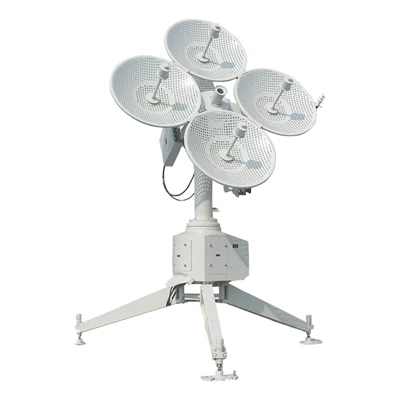
At the end of the day, a seismometer in the desert is only as good as its ability to handle the environment. We’ve spent years testing, tweaking, and refining our units to do exactly that. If you’re ready to stop dealing with flaky units that quit after a month, and start getting reliable, accurate data no matter where you are, reach out to us to talk through your project. We’ll give you straight, no-BS advice, and a setup that works for your budget and your site.
Meteorological Sounding System References
- Seismic Instrumentation for Extreme Environments, Bulletin of the Seismological Society of America, 2021
- Off-Grid Power Solutions for Remote Seismic Monitoring, Journal of Energy and Environmental Engineering, 2022
- Noise Reduction Techniques for Seismic Sensors in Arid Regions, Geophysics, 2020
- Environmental Testing Standards for Industrial Electronics, International Electrotechnical Commission (IEC) Standard 60068, 2019
Tianjin Blooming Technology Ltd.
Address: Main Building, No. 10 Wuhua Road, Huayuan Industrial Zone, Binhai High-tech Zone, Tianjin, China
E-mail: sales@blooming-tech.com
WebSite: https://www.blooming-tech.net/
