Hey there, let’s cut to the chase – if you’ve ever ordered quartz slabs for a countertop, backsplash, or even that wild accent wall you’re planning, you’ve probably stared at a spec sheet wondering, “Wait, why does this slab size look totally different than what my buddy down the block ordered?” As a quartz slab sizes supplier, I get so many DMs and calls about this exact question: Are quartz slab sizes the same globally? Short answer? No, and there’s way more to it than just “different countries do different things.” Let’s break this down like we’re chatting over a coffee (no stuffy industry jargon, promise). Quartz Slab Sizes
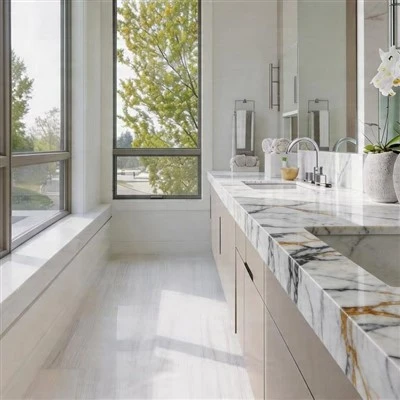
First off, let’s start with the basics so we’re all on the same page. Quartz slabs aren’t those little 12×12 inch tiles you stick in a kitchen backsplash – these are big, solid, engineered stone slabs that come in huge sheets, right? They’re made by compressing ground quartz crystals with resin and pigment under tons of pressure, so their size depends on the manufacturing equipment, market needs, and even building codes of where they’re made. I’ve been doing this for 8 years now, and I’ve shipped slabs to 17 different countries, so I’ve seen first-hand how size varies, and it’s not random.
Let’s start with the US and Canada first, since that’s a market we know super well. The standard here? Most suppliers (including us) go with two main sizes: 126 x 63 inches and 132 x 65 inches. Wait, let’s translate that to feet for folks who think in imperial (most of North America does): that’s 10.5 feet by 5.25 feet, and 11 feet by 5.4 feet. For a long time, the 126×63 was the go-to – it fits perfectly for standard kitchen countertops, because you can cut it into a 10-foot island and a 10-foot perimeter without too much waste, and most standard upper cabinets are sized to match. But a few years back, we started seeing more demand for the bigger 132×65 slabs. Why? People are doing bigger kitchens now – islands that are 12 feet long, or even extending countertops into a whole wall of floor-to-ceiling quartz for a statement look. That extra 6 inches in length and 2 inches in width makes a huge difference – less cutting, less seams, which is a win for installers and homeowners alike. We stopped carrying only the 126s about 5 years ago because so many of our clients (from high-end remodelers to small cabinet shops) started asking for the bigger ones.
Now, hop across the pond to Europe, and things shift. The standard here is metric, obviously, so the sizes are all in centimeters. The most common quartz slab size in the EU is 300 x 140 cm, which is roughly 118 x 55 inches. Wait, that’s way different than the US standard. Why? Well, European cabinet dimensions are based on metric, so their countertop runs are often smaller – a standard kitchen island in Germany might be 8 feet long, not 10. Also, the manufacturing equipment in many European factories tops out around 300 cm in length, right? I’ve visited a couple of quartz plants in Italy (which is a huge quartz hub) and they told me their biggest press can only handle 320 cm, but most of their production is 300 cm because that’s what their local contractors order. There’s a niche market for bigger slabs over there too, especially in places like the UK where homeowners are doing open-plan living with big kitchen spaces, but it’s not nearly as common as the smaller metric standard.
Wait, what about Asia? That’s a whole other ball game. I’ve shipped a ton of slabs to China, Japan, South Korea, and Southeast Asia, and their standards are all over the place, depending on the country and even the region within a country. In China, for example, the two most common sizes are 240 x 120 cm and 280 x 160 cm. Wait, that’s way shorter and narrower than US or EU slabs? No, wait – some Chinese suppliers actually make huge slabs too, like 320 x 160 cm, which is about the same size as the US’s 132×65. But the thing about China is that there are so many small, local manufacturers, each with their own press sizes, so you don’t have a single national standard. Japan is more standardized – they use a size called 270 x 160 cm, which is roughly 106 x 63 inches. That fits perfectly with their smaller, more compact kitchen layouts, which are super common in Tokyo apartments. Southeast Asia, like Vietnam or Thailand, tends to use a mix – some local suppliers make smaller slabs for residential homes, while imports from China or the US use the bigger sizes for commercial projects, like hotel lobbies or office spaces.
Now, you might be thinking, “Okay, that’s just different regions, but what about when a project uses quartz slabs from one region in another?” That’s where things get tricky. A few years back, we had a client in Miami who was working on a 10,000 sq ft commercial project for a hotel, and they wanted to use a big-format Italian quartz slab that was 320 x 160 cm. The problem? Our installers in the US are used to working with slabs that are 132 inches long, so handling that 320 cm (over 10.5 feet) slab required a whole different rig – we had to rent special equipment just to move it into the building, because the doorways in that old downtown hotel couldn’t fit a standard-sized slab dolly. On the flip side, a client in London tried to order our US 132×65 slabs for a residential project, and they had to cut down the length because their kitchen was only 9 feet long – they ended up wasting almost 2 feet of slab, which added $1,200 to their total cost. That’s the kind of headache that comes from not checking slab sizes before you order, and it’s why we always ask our international clients to send us their layout specs before we ship anything.
Why do these sizes differ so much, anyway? Let’s get into the “why” that makes this make sense, not just a random fact. First, manufacturing equipment. Quartz slabs are made in giant hydraulic presses that weigh hundreds of tons. The size of the press directly limits how big the slab can be. A lot of European manufacturers build their presses to be smaller because their local demand is for smaller residential projects, while US and some Chinese manufacturers invest in bigger presses for large-scale commercial work. Second, market demand. In North America, open-plan living is huge – people want big, continuous countertops that don’t have a bunch of seams, so they need bigger slabs. In Europe, kitchens are often more compact, so smaller slabs work better. In Asia, it’s a mix – dense cities mean small apartments, so smaller slabs, while commercial properties often go big. Third, shipping and handling. Big slabs cost more to ship because they take up more space, and they’re harder to move without breaking. So suppliers will make the size that their local market is willing to pay for – why make a 12-foot slab if no one in your area can afford to ship or install it?
Wait, but here’s the good news: it’s not like there’s zero overlap. We’ve had clients who want a US-size slab but are in Canada, or a European size in Australia, and it works out fine because many suppliers (including us) will adjust to fit the project. But you can’t just assume that a slab labeled “standard” in one country is the same in another. I once had a contractor call me panicking because he ordered “standard quartz slabs” from a supplier in Mexico, and they were 118 inches long – way shorter than the 126 he needed for a kitchen in Austin. He ended up having to import our slabs at the last minute, which cost him extra in rush shipping, and he almost lost the project because of it. That’s the kind of mistake that can be avoided with a quick check.
Another thing I’ve noticed: the rise of big-format slabs is blurring these lines a bit. Like, a lot of manufacturers are now making “universal” big slabs that work across regions – 320 x 160 cm is a size that’s common in the US, Europe, and China now, because it’s big enough for commercial projects and can be trimmed down for smaller residential jobs. We started stocking that size about 2 years ago, and it’s become our best-selling international slab, because it works for almost every market.
So, to wrap this up: no, quartz slab sizes are definitely not the same globally. It all comes down to how manufacturers’ equipment is set up, what local builders and homeowners need, and even how easy it is to ship and install big slabs in different areas. The key takeaway here? Always confirm the slab size with your supplier before you order, especially if you’re crossing borders or working on a project that needs seamless countertops. Don’t just go by the “standard” label – it might be standard in one country, but not yours.
If you’re working on a project and need specific slab sizes tailored to your location, or you want to ask about availability for your country, hit us up to chat. We’ve shipped slabs all over the world, and we can help you pick the right size that fits your project and your budget. No guesswork, no hidden fees, just straightforward info.
Quartz Surface References
Stone World. (2022). Global engineered stone trends: Size and specifications.
International Union of Stone Fabricators. (2023). Quartz slab size standards across North America, Europe, and Asia.
European Stone Federation. (2021). Metric quartz slab manufacturing and market data.
China Building Materials Association. (2022). Engineered stone production and size variations in China.
Wuhu Junde New Material Technology Co., Ltd.
As one of the most experienced quartz slab sizes manufacturers and suppliers in China since 1998, we warmly welcome you to wholesale top-quality quartz slab sizes made in China here from our factory. If you have any enquiry about cooperation, please feel free to email us.
Address: No.8 Yulin Road, Xinwu Economic Development Zone, Anhui Province, China
E-mail: 1127319898@qq.com
WebSite: https://www.jundequartz.com/
