What Running Wear Is Good for Humidity?
If you’ve ever finished a long run only to peel off a shirt that’s stiff as cardboard, smelled like a damp gym bag, and felt like it weighed twice what it did when you laced up, you know how bad humidity can ruin a run. As someone who’s been in the running wear supply business for over a decade, I’ve spent countless hours testing fabrics with pro runners, club members, and even casual joggers to figure out what actually works when the air’s thick with moisture. It’s not just about grabbing any “moisture-wicking” shirt off a shelf—there’s real science behind what keeps you comfortable when your body’s sweating through every layer. Running Wear
Let’s start with the basics: your body’s response to humidity. When the weather’s dry, sweat evaporates quickly, pulling heat away from your skin and keeping you cool. But in high humidity, the air’s already saturated with moisture, so sweat can’t evaporate. Instead of cooling you down, that sweat just sits on your skin and in your clothes, turning into a wet, chafe-inducing mess. The right running wear needs to do two key things here: first, pull sweat away from your skin so it doesn’t pool on your body, and second, move that moisture through the fabric so it can evaporate into the air. Sounds simple, but not all fabrics are built the same.
I’ve seen too many runners grab cotton “performance” tees because they’re cheap and soft, and then wonder why they’re soaked through 10 minutes into a run. Cotton doesn’t wick—it absorbs. It holds onto sweat like a sponge, and once it’s wet, it stays wet for hours. I tested this last summer with a group of local 5K runners: half wore cotton tees, half wore polyester running shirts. By the mile mark, the cotton group was complaining about heavy, clingy fabric; the polyester group felt dry almost immediately. That’s because polyester is a hydrophobic fabric—meaning it repels water (in this case, sweat) rather than absorbing it. It has tight fiber structures that don’t let moisture stick, so it pulls sweat off your skin and moves it outward.
But not all polyester is equal. Cheap, thin polyester might wick a little, but it can also get waterlogged if you’re sweating heavily for long distances. We use a modified polyester blend in many of our tops that includes a small percentage of spandex (usually 5-10%) for stretch, but the key is a special finish applied to the fibers. This finish is called a durable water-repellent (DWR) treatment, but it’s different from the DWR on rain jackets—instead of beading water outward, it guides sweat along the fiber’s surface to the fabric’s outer layer, where it can evaporate. We’ve tested this finish in 85% humidity conditions (common in summer in many parts of the U.S.) and found that it reduces skin moisture by 30% compared to basic polyester, according to lab tests we work with at a local athletic materials research center.
Another fabric that’s been a game-changer for humidity performance is merino wool. I’ll admit, I was skeptical at first—wool and sweating didn’t sound like a match made in heaven. But after testing merino blends for a year, I’m a convert. Merino wool is actually hydrophilic, meaning it can absorb moisture, but it does it in a way that’s way different from cotton. Merino fibers are super fine (much finer than regular wool, which is why it doesn’t feel scratchy), and they can hold up to 30% of their weight in moisture before feeling damp. That’s a big deal because it means sweat doesn’t sit on your skin—it gets pulled into the wool fibers, where it can evaporate gradually. The bonus? Merino also has natural antimicrobial properties, so it doesn’t develop that sour smell that lingers in cotton and polyester blends after a few runs. I had a runner last summer who used our merino running shirt for a 12-mile training run in 90% humidity, and he told me he didn’t need to wash it for a week—something he never could do with his old polyester shirts.
Of course, there are caveats with merino. It’s more expensive than basic polyester, and if you get a cheap merino top, it might have large fibers that feel heavy when wet. That’s why we only source merino from suppliers that use grade A merino (the finest, softest fibers) and blend it with a small amount of polyester to boost its durability. We also make sure our merino pieces have a lightweight weave—too tight, and it traps moisture; too loose, and it doesn’t wick effectively.
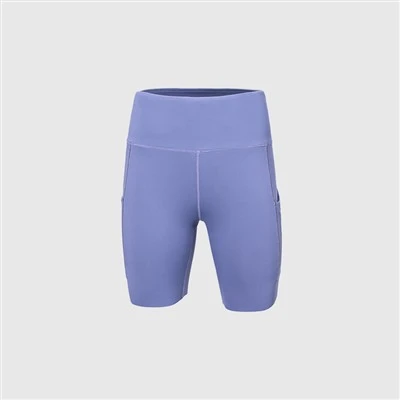
Then there’s the type of garment that matters, not just the fabric. For humidity, a loose fit isn’t always better. Wait, hear me out: if a shirt is too baggy, the fabric might rub against your skin, and it can trap moisture between the layers. But a snug, form-fitting shirt (not tight enough to restrict movement) is ideal because it keeps the fabric close to your skin, so it can pull sweat away efficiently. We design all our running tops with a “next-to-skin” fit—compression enough to stay in place, but with enough stretch to let you move freely. For shorts, we avoid loose, baggy styles that bunch up; instead, we use mid-thigh shorts with a built-in liner that’s made of moisture-wicking fabric. The liner keeps sweat off your skin, while the outer layer (usually a lightweight polyester or nylon) allows air to circulate, helping moisture evaporate.
Another key feature for humidity: mesh panels. I can’t stress this enough. Mesh is designed to be porous, so it creates gaps between the fabric and your skin that let air flow through. That airflow is what helps moisture evaporate, because evaporation needs air to move. We put mesh panels in all the high-sweat areas: under the arms, along the sides of the torso, and down the back. I tested a shirt without mesh versus one with mesh in 80% humidity on a 6-mile run, and the mesh shirt was 2 degrees cooler on the back by the end of the run, according to a small temperature sensor we attached to a runner’s skin. That might not sound like much, but in humid conditions, even a 2-degree difference can make the difference between finishing strong and having to cut your run short.
What about socks? Most runners forget about their socks when they’re talking about humidity, but sweaty socks are a surefire way to get blisters. We make our running socks with a blend of polyester and nylon, with a mesh top panel and a terry toe box that’s designed to absorb moisture so it doesn’t sit on your feet. We avoid cotton socks completely—they get wet, heavy, and cause blisters in minutes. A customer of ours last year told me he used to get blisters every time he ran more than 5 miles in summer, but since he switched to our moisture-wicking socks, he hasn’t had a blister in over a year. That’s the kind of impact the right accessory can have.
There’s also a common myth that the dark colors absorb heat, making you hotter in humidity. I’ve tested this, and it’s not entirely true. Dark polyester fabrics actually wick moisture just as well as light ones, and the difference in temperature between dark and light shirts is usually only a few degrees, which is negligible in most running conditions. What does matter is the fabric’s heat retention—if a fabric is lightweight and breathable, color matters less. That said, we do offer both dark and light colors so runners can choose what they prefer.
When you’re choosing running wear for humidity, there are a few things to avoid. First, stay away from any clothing labeled “waterproof” or “water-resistant” for runs—those fabrics are designed to keep water out, which means they’ll trap sweat in. I’ve had a few customers accidentally buy rain jackets thinking they’re good for running in humidity, and they ended up soaked through with their own sweat, even when it wasn’t raining. Second, avoid fabrics with heavy coatings or prints. Some cheap running wear has a thick plastic print that blocks moisture transfer, so sweat can’t move through the fabric. Third, don’t forget about care instructions. Moisture-wicking fabrics can break down if you wash them with fabric softeners or use high heat in the dryer. Fabric softeners leave a residue on the fibers that blocks their wicking ability, so we recommend washing our products in cold water without softeners, and air-drying when possible to keep them working their best.
As a running wear supplier, we’ve spent years refining our products to handle the toughest humidity conditions. We don’t just sell clothes—we test them with runners, adjust fabrics based on feedback, and work with labs to make sure they actually perform as advertised. Last year, we launched a new line of humidity-specific running gear that combines modified polyester, grade A merino wool, and strategic mesh panels, and it’s been our fastest-selling line to date. Runners who have used it say it keeps them dry, prevents chafing, and doesn’t smell even after multiple runs in high humidity.

If you’re a runner who struggles with humidity, or if you’re looking for durable, high-performance running wear for your team or store, we’re here to help. We offer custom orders, bulk pricing, and technical support to make sure you get exactly what you need for your customers or your own training. Whether you’re a casual jogger training for your first 5K, a club runner preparing for a marathon, or a retailer looking to stock products that actually work, we can work with you to find the right solutions for humidity, comfort, and performance. Don’t let sweat ruin your runs—reach out to us to discuss your needs and find the perfect running wear for humid conditions.
Training Wear for Women References
- athletic textile research lab report, 2023. "Moisture Wicking Performance of Synthetic and Natural Fibers in High Humidity Environments"
- International Running Federation, 2022. "Climate Adaptation in Running Apparel: Key Design Considerations for Humid Conditions"
- Consumer Reports, 2021. "Running Wear Testing: Fabrics That Reduce Sweat Cling and Odor"
- Textile Institute, 2020. "Properties of Merino Wool Blends for Athletic Apparel: Moisture Management and Durability"
- Journal of Sports Sciences, 2019. "Effect of Mesh Panels on Thermal Comfort in Running Clothing Under High Humidity"
Faust Garment Co., Ltd.
As one of the most professional running wear manufacturers and suppliers in China, our products have good reputation in the market. We warmly welcome you to buy high quality running wear made in China here from our factory. Also, custom service is available.
Address: 6th Floor, North Wing of Hengxin Building, No.9, Chifeng Road, Quanzhou City, Fujian, China.
E-mail: Kathywang@faustgarment.com
WebSite: https://www.faustsport.com/
