Hey there, it’s Jake from the perfluoroelastomer (FFKM) side of the industry— I get hit with this exact question like, every single week: “What’s the volume resistivity of perfluoroelastomer?” Most folks ask because they’re dealing with applications where even a tiny electrical leak can ruin a whole batch or blow out a piece of equipment, so they’re not just messing around with random rubber. Let’s cut through the jargon, no stuffy textbook lectures here, and get into what this number actually means, why it matters, and how we (as your go-to FFKM supplier) can help you nail it for your project. Perfluoroelastomer
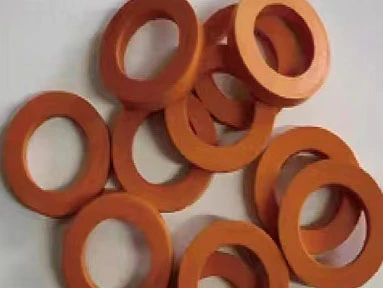
First off, let’s make sure we’re speaking the same language. Volume resistivity, right? It’s not just “how well does this rubber conduct electricity?”— it’s the actual measurement of a material’s ability to resist the flow of electrical current through its body, not just along its surface. Units? Oh yeah, ohms per centimeter (Ω·cm) for anyone keeping score, but if that’s over your head, think of it this way: higher number = way better insulator, lower number = conducts more. For rubber parts, especially FFKM, this isn’t a random spec— it’s make-or-break for stuff like semiconductor manufacturing, chemical processing pumps, aerospace wiring seals, and even high-voltage industrial equipment. If your FFKM is too conductive here, you’re gonna have problems, full stop.
Now, here’s the big, real-world tea that most basic spec sheets won’t tell you: perfluoroelastomer’s volume resistivity isn’t a single fixed number. I see this all the time— engineers call up asking for “the resistivity of FFKM” like it’s a universal constant, and I have to laugh a little because it depends on so many factors. Let’s break down the main ones that actually change this number, not just fluff.
First up, the grade of FFKM. Not all FFKM is created equal. We make a few different lines here at our shop, because different uses need different stuff. Our standard general-purpose FFKM, the one that works for most chemical sealing, clocks in at around 10¹⁵ to 10¹⁷ Ω·cm. That’s super high— like, way better than natural rubber, silicone, even most EPDM stuff. But if you need something that can handle extreme heat (like 300°C in a semiconductor chamber) or harsh plasma environments? Our plasma-grade FFKM? That drops a little, to like 10¹³ to 10¹⁵ Ω·cm. Why? Because plasma etches the surface a tiny bit, and those grades are formulated to hold up to that, not just be a perfect insulator. We also make low-compression-set FFKM for parts that sit under constant pressure, and their resistivity is still in that 10¹⁴ to 10¹⁶ range— still way above what most applications need to avoid issues.
Then there’s how the part is processed. Molding temperature, cure time, post-curing steps— that’s huge. If you rush a cure, or use too low a temperature, you get what’s called “uncrosslinked” sites in the rubber. Those sites can hold onto ions, right? Ions conduct electricity, so that will lower the volume resistivity. Last year, we had a customer who tried to mold their own FFKM parts in-house, rushed the cure to save time, and their parts tested at 10¹¹ Ω·cm— way too low for their cleanroom application, so they had to scrap $50k worth of parts and come to us. We post-cure all our parts properly, at the right temp for the right time, so we eliminate those ion sites, keeping that resistivity number rock solid.
Environmental factors matter too, and this is where a lot of people get tripped up. If you leave FFKM sitting in a pool of concentrated sulfuric acid for 6 months, or expose it to 250°C heat for years, or even high humidity? That can change it. Wait, but how much? In most cases, it’s minimal for the right grade. For example, our general-purpose FFKM, after 1,000 hours in 180°C air, only drops to around 10¹⁴ Ω·cm— still an amazing insulator. But if you use the wrong grade for a harsh chemical, like putting a regular FFKM in hot aqua regia? Yeah, that can break down the polymer chain a little, and that will lower resistivity. But if you pick our chemical-resistant specialty grade? That number stays almost unchanged. We test every batch we make in actual use environments, not just a lab, so we know exactly how our parts hold up.
Let’s also talk about why this spec actually matters for your project, not just a number on a sheet. Let’s take semiconductor manufacturing, for example. The fab guys we work with need FFKM seals in their etch chambers. If the volume resistivity is too low— say, below 10¹² Ω·cm— you get electrical arcing between the chamber and the seal, which ruins $10k+ silicon wafers in seconds. That’s not a hypothetical, we had a fab customer a couple years back who used a cheap imported FFKM that tested at 10¹¹ Ω·cm, and they lost a whole batch of 50 wafers because of that. They switched to our standard grade, which is guaranteed at 10¹⁵ Ω·cm minimum, and haven’t had an issue since.
Another example: high-voltage transformers. The rubber seals around the wiring need to insulate the high voltage (10k+ volts) from the metal casing. If the FFKM’s volume resistivity is even a little low, you get leakage current, which wastes energy and can cause overheating, leading to a fire. We work with a power utility company that uses our high-heat FFKM for their transformer seals, and their testing shows that the resistivity stays at 10¹⁶ Ω·cm even after 10 years of outdoor use— perfect for their needs.
Wait, let’s clear up a common myth too. Some people think that higher volume resistivity is always better. But that’s not true. If you’re making a part that needs to be slightly conductive— like, say, an antistatic seal for electronics— you don’t want that 10¹⁵ number, you want something around 10⁸ to 10¹⁰ Ω·cm. But that’s not FFKM, we make specialty conductive fluoroelastomers for that. The point is, the right volume resistivity for your application is the sweet spot where it’s not too conductive to cause leaks, and not so insanely high that it’s unnecessarily expensive. FFKM’s range is perfect for most industrial applications, which is why it’s the go-to material.
Now, how do we, as a perfluoroelastomer supplier, make sure you get the right volume resistivity for your project? First, we don’t just send you a generic spec sheet. We ask a ton of questions: what’s the application? What’s the temperature range? What chemicals will it be exposed to? Is it going to be in a plasma chamber? Do you need it for a cleanroom? That lets us match you to the exact grade of FFKM that will hit the resistivity number you need, no overpaying for extra performance you don’t need. Second, we test every batch before it leaves our facility. We use ASTM D257 standards for volume resistivity, which is the industry standard, so you know the numbers are accurate, not made up. Third, we offer custom formulations too— if your project is super unique, like a new aerospace seal that needs exact resistivity, we can tweak the polymer mix to get it right.
I get that sometimes you just want a simple number, right? You’re cramming for a meeting, or you need to spec parts for a new build, so you don’t have time to dig through specs. As a quick rule of thumb, for 90% of general industrial sealing, semiconductor, and aerospace applications, the volume resistivity of standard FFKM is 10¹⁴ to 10¹⁷ Ω·cm. For plasma or harsh chemical environments, it’s 10¹³ to 10¹⁵. If you need something in between or outside that range, just hit us up, we can help.
Let me wrap this up real quick, no hard sell— but if you’re in the market for FFKM parts, and you need to lock in the right volume resistivity for your project, don’t guess with cheap imports or generic specs. Our team has been working with FFKM for over a decade, we’ve fixed more resistivity issues than I can count, and we can get you parts that are precisely tested to meet your requirements. Whether you need a small custom seal for a medical device, or thousands of parts for a semiconductor fab, we’ve got you covered. If you’ve got questions, or you’re ready to start a project, reach out to our team— we’re here to help you get it right the first time.
Hydrogenated Nitrile References
ASTM International. (2021). Standard Test Method for DC Resistance or Conductance of Insulating Materials. ASTM D257-21.
John B. Corley. (2018). Perfluoroelastomers: Chemistry, Processing, and Performance. Wiley-VCH.
Perfluoroelastomer Manufacturers Association. (2022). Industrial Application Guide for FFKM Seals. PMGA Technical Bulletin 007.
Wuhu Chaori Rubber and Plastic Technology Co., Ltd.
As one of the most professional perfluoroelastomer manufacturers and suppliers in China, we have world-leading production equipment and strong manufacturing capabilities. Please feel free to wholesale bulk durable perfluoroelastomer made in China here and get quotation from our factory. For price consultation, contact us.
Address: Qihang Road, Xinwu Economic Development Zone, Wanzhi District, Wuhu City, Anhui Province, P.R. China
E-mail: chaori2026@163.com
WebSite: https://www.chaorirubber.com/
