If you’re a machinist or production manager dealing with Horizontal Machining Centers (HMCs), you’ve probably wrestled with a familiar pain point: your HMC’s spindle sitting idle, waiting for a pallet to load or unload, while your team scrambles to switch parts. That’s where pallet pools come in, and as an HMC supplier, I’ve seen first-hand how these unassuming racks of pallets can turn a good machine into a production workhorse. Let’s break down their biggest advantages, no stuffy jargon, just real-world wins that matter to your bottom line. Horizontal Machining Centers

First, let’s cut through the confusion: a pallet pool isn’t just a storage rack. It’s a modular, automated (or semi-automated) system that holds multiple workholding pallets, each preloaded with a part (or a batch of parts) waiting to be swapped into your HMC. For shops that run lights-out shifts, high-mix low-volume jobs, or even just back-to-back runs, this system eliminates the single biggest bottleneck in HMC operation: spindle downtime. I remember a client last year with a 4-axis HMC, running aerospace brackets. Before their pallet pool, they’d switch parts manually, which took 15 to 20 minutes every time the spindle finished a run. That translated to almost 2 hours of downtime every 8-hour shift—for a machine that costs $150 an hour to run, that’s $300 a day lost, or over $75,000 a year. After adding a 12-pallet pool, their downtime dropped to 10 minutes a shift tops, and they picked up 12 extra days of production a month. That’s not a trivial upgrade; that’s like getting a second HMC for free, without the extra overhead of a new machine.
Next up, flexibility for high-mix jobs—something every HMC user struggles with. A lot of shops buy HMCs because they handle complex, multi-sided parts way better than VMCs, but they end up underutilizing that capability because they can’t switch between part types fast enough. A pallet pool solves that by letting you stage multiple pallets with different setups at once. Let’s say you run three part types for medical devices: a hip stem, a spinal fusion component, and a bone plate. Each needs a different workholding fixture, different tooling, and different program offsets. With a pallet pool, you can preload all three pallets overnight, or on your lunch break, and then trigger a pallet swap in 90 seconds flat during the spindle’s last cycle of a part. No more repositioning fixtures, no more re-calibrating work offsets mid-shift, no more wasting time on setup between jobs. I worked with a small job shop that does contract work for defense contractors—they go from making engine brackets to trigger housings to mount plates in a single day, something that would’ve taken 4 hours of setup time before their pool. Now they do it in 10 minutes, and their on-time delivery rate jumped 20% because they don’t miss deadlines between small-batch runs.
Lights-out manufacturing is the big one right now, especially as shops deal with labor shortages. If you’ve ever wanted to run your HMC overnight or on weekends with no staff on site, a pallet pool is non-negotiable. Think about it: you load 10 pallets with parts, run one shift with your team, then leave the machine and pool to handle the rest. When the spindle finishes a part, the pool automatically swaps in the next preloaded pallet, all while your operator is gone. No one has to babysit the machine, no overtime for weekend shifts, and you’re maximizing every minute of your HMC’s up time. We had a client in automotive parts that used to only run their HMC two 8-hour shifts a day, five days a week. After adding a 16-pallet pool, they went to three 8-hour shifts plus 40 hours of lights-out weekend production, all with the same number of operators. Their output went up 70% without hiring a single new employee. That’s game-changing for shops struggling to keep up with demand when they can’t find enough skilled labor.
Wait, but let’s be real—pallet pools aren’t one-size-fits-all, and there are advantages specific to how HMCs are designed, that you don’t get with VMC setups. HMCs have that horizontal axis, so their workzone is more accessible from the side, which makes integrating a pallet pool way simpler than trying to attach a similar system to a vertical machine. Also, most modern HMCs come with built-in controllers (like Siemens 840D or FANUC 31i) that sync seamlessly with pallet pool systems, so you don’t have to mess with custom programming to get them to talk to each other. No more clunky third-party integrations that cause downtime—they just work. I’ve seen shops try to rig up pallet systems for VMCs and end up with more problems than solutions, but with HMCs, the integration is natural, which cuts down on installation time and maintenance. Of course, there’s also the workholding side: HMCs are built for precise, multi-sided machining, so each pallet in the pool can have custom fixtures tailored to your parts, and swapping them doesn’t throw off accuracy. A lot of guys worry that swapping pallets will mess up part tolerance, but modern pallet pools use precision locating pins that repeat to within 0.0002 inches, so your parts stay on spec every single time. That’s huge for industries like aerospace and medical, where tolerance is non-negotiable.
Another underrated advantage: reduced risk of errors and setup waste. Let’s say you manually load a pallet the night before an overnight run, and you forget to clamp a part down, or you set the wrong tool offset. If you’re not there when the machine starts, that $500 billet of titanium gets ruined, and you lose a full shift of production. With a pallet pool, you can set up each pallet, run a quick verification cycle on the controller, and confirm everything is good to go before you leave. Also, you can stage backup pallets, so if one pallet has a setup error, you swap it out in seconds instead of having to tear down the entire machine’s workzone. I had a client a couple years back who ruined a titanium billet because of a manual setup mistake—cost them $1,200 in material and a week of lead time. After adding a pallet pool, they eliminated that error entirely because each setup is verified before it’s put into rotation, and they’ve cut scrap from manual setup by 90%. That’s not just time saved; that’s money kept in your pocket, no wasted material or rework.
Now, let’s talk about scaling, because that’s something a lot of shops overlook when they buy their first pallet pool. You don’t have to go out and buy a 20-pallet system on day one. Most pallet pools are modular, so you can start with a 4 or 8-pool setup, then add more pallets as your shop grows or your HMC runs more jobs. I had a small shop that started with a 6-pallet pool to run two shifts, then added another 6 pallets when they went to lights-out production, all without having to replace their original system. That means you don’t have to make a huge upfront investment right away—you can grow with your needs, which is perfect for small to mid-sized shops that don’t have a huge capital budget for new equipment.
Wait, but let’s address the elephant in the room: I know some guys reading this are thinking, “Yeah, but pallet pools are expensive. Is it really worth it?” Let’s do the math quick, using real numbers from my clients. The average cost of a mid-sized HMC is around $150,000. A 12-pallet pool, properly integrated, runs about $25,000 to $35,000. If your HMC is sitting idle 20% of the time (which is way lower than average for shops that don’t have a pallet pool), that’s 1,000 hours a year of lost time. At $100 an hour (the lower end of shop rate), that’s $100,000 a year in lost revenue. The pallet pool pays for itself in 4 to 6 months. And that’s before you factor in lower scrap, better on-time delivery, and not having to hire extra labor for overtime or weekend shifts. For shops running high-mix, low-volume jobs, that ROI is even faster, because the setup time savings are way bigger.
Of course, there are caveats—you can’t just buy a pallet pool and plug it in, it works best when it’s matched to your HMC model and your job mix. That’s why as an HMC supplier, I don’t just sell you a machine and a pool and dip. We work with you to map out your current production, how many shifts you run, what kind of jobs you do, and what your goals are, to size the pallet pool perfectly for you. If you only run one part type all day, a 4-pallet pool is enough. If you switch parts every few hours, a 12 or 16-pool is better. We also handle the integration, so the pool syncs with your HMC controller, and we provide ongoing support if anything goes wrong. No one wants to be stuck with a new system that breaks and no one can fix it, right?
At the end of the day, pallet pools turn an HMC from a standalone machine into a production asset that works for you, 24/7, not just when your operators are clocked in. They fix the biggest bottleneck in HMC operation—spindle downtime—and give you the flexibility to handle any job, from small batches to lights-out runs, without burning out your team or blowing your budget on new equipment. If you’re tired of seeing your HMC sit idle between runs, missing deadlines, or leaving money on the table because of wasted setup time, a pallet pool is the upgrade you need.
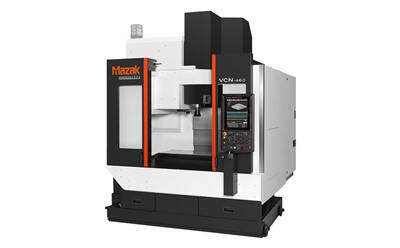
If you’re looking to maximize your HMC’s performance, cut down on downtime, and scale your production, we can walk you through the best pallet pool setup for your shop and your goals. Reach out to us to talk through your needs and get a personalized quote that fits your budget.
5-axis Machining Centers References
- Modern Machine Shop. (2022). “Pallet Pool Systems: Boosting HMC Productivity by Reducing Spindle Downtime.” Retrieved from industry trade archives
- Machining Design. (2021). “Lights-Out Manufacturing with Horizontal Machining Centers: Key Components and ROI.” Retrieved from manufacturing technology research reports
- VDI 3441. (2020). “Workpiece Handling Systems for Machine Tools: Pallet Pool Integration and Performance Metrics.” German Society for Engineering Design Standards
Hermens Industrial Co., Ltd.
As one of the most professional horizontal machining centers enterprises in China, we’re featured by quality products and low price. Please rest assured to buy cheap horizontal machining centers in stock here and get quotation from our factory. We also accept customized orders.
Address: 9/59 Moo 14, Rachathewa , Bang Phli , Samut Prakan Province 10540
E-mail: liu_jincheng@hzhemen.com
WebSite: https://www.hermensindustrial.com/
