Hey everyone, it’s Jake here, from the team that gets way too hyped talking about downspout roll forming machines (yeah, I know, wild right?). Today we’re diving into something I get asked at least twice a week from contractors, fabricators, even startup sheet metal guys—how much better can these machines actually get? Like, beyond the "it makes downspouts fast" vibe, what’s the real efficiency gain we’re leaving on the table, especially since I’m the one selling these things, not just rambling about them. Let’s break this down, no stuffy engineering jargon, promise. Downspout Roll Forming Machine
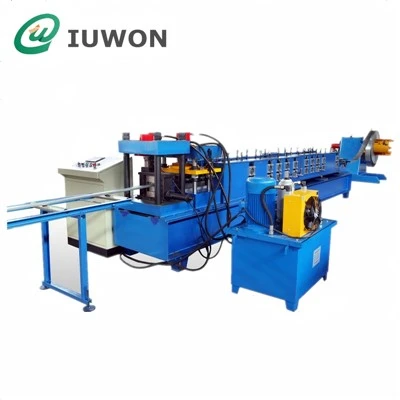
First, let’s set the scene: if you’re running a fabrication shop, or even a small crew doing gutter and downspout installs, every minute counts. Back when I started in this game (12 years ago now, yikes, I’m old), we were hand-forming downspouts with tin snips, hammers, and prayer—one 10-foot downspout took 10 whole minutes to mess up, cut, bend, and seal. Then roll forming machines came along, and that same job took 2 minutes flat. That’s a 80% time cut, right? But wait—that’s just the baseline. The machines most people use now are still leaving so much on the table. Let’s talk about the biggest efficiency gaps I see every day when I’m helping customers upgrade their setups, or troubleshooting their clunky old machines.
One of the biggest waste culprits isn’t even the machine itself—it’s the material handling on either end. Let’s be real: most entry-level downspout roll forming machines (the ones a lot of guys pick up cheap) have a manual uncoiler. You load a 4,000-pound steel coil, and someone’s got to stand there turning it like they’re winding a old-school record player, right? If you forget to slow the uncoiler, the coil gets tangles—big tangles, that take 15, 20 minutes to fix. One customer I worked with last quarter told me he was losing 3-4 hours every single day to uncoiler tangles and manual coil loading. That’s not "slow machine"—that’s "manual labor ruining efficiency". Now, what’s the upgrade here? A motorized uncoiler with a tension control system that syncs up exactly with the roll forming line speed. No more tangles, no more standing around cranking. The difference? That customer went from 3-4 hours lost a day to 10 minutes max for coil changes. That’s a 95% reduction in uncoil-related downtime. Wild, right?
Next up: downtime from tooling changes. Let’s say you’re switching from 3-inch round downspouts to 4-inch rectangular ones for a job. On a lot of older machines, that means pulling out 10+ different tooling rolls, swapping them one by one, adjusting every gap by hand, testing a scrap piece, repeating—that takes 45 to 60 minutes per change. For contractors who do multiple jobs a day, that adds up to hours of lost production. I see so many guys just sticking to one size because switching is such a pain. The good news? Modern tooling for these machines is modular, and a lot of the new setups have quick-change roll systems. I’m not talking about the cheap flimsy ones that slip—we’re talking positive-locking tooling that clicks into place, with pre-set adjustments so you don’t have to mess with every gap. One of our repeat customers, a big gutter company in Texas, told me their tooling change went from 50 minutes to 12 minutes. That’s a 76% cut in changeover time, and now they can take on more small jobs instead of avoiding them because switching sizes was a hassle. That’s not just faster—that’s more revenue, straight up.
Wait, let’s not skip the part about downtime from errors. What happens when a roll forming machine messes up a piece of downspout? Either the tool’s misaligned, or the feed is off, and suddenly you have 10 feet of scrap steel, or even a whole bad coil segment. How do you catch that? Most old machines don’t have in-line inspection—you’re checking the finished piece by hand at the end, after you’ve already made 5 bad ones. Newer machines have simple in-line sensors that check the diameter, the seam tightness, the length as it’s being formed. If something’s off, it stops before you waste material, even before you make a whole bad piece. I had a customer last year who was wasting $200 to $300 worth of steel every week from scrap—after adding sensor tech, that went down to like $15 a week. That’s not just efficiency in time, that’s efficiency in material, which is huge because steel (and aluminum, copper) isn’t cheap. We all hate wasting expensive metal, right?
Now, let’s talk about speed—like, actual forming speed. A lot of guys think all downspout roll forming machines are the same speed, but no. The baseline speed for an entry-level machine is around 30 feet per minute (FPM) . A lot of mid-tier machines hit 50 FPM, and the higher-end ones with better motor control and precision tooling can hit 80-100 FPM. Wait, that’s double the speed! But hold on—you can’t just crank the speed up to 100 FPM if your uncoiler, your cutoff system, and your stacker can’t keep up. That’s why the total line efficiency is only as good as the slowest part. If your cutoff saw takes 10 seconds to cut a 10-foot downspout, even if the forming is fast, you’re still waiting on the saw. Matching all the components to work in sync is where the real speed gain happens. I had a roofing contractor in Florida tell me he switched from a old 30 FPM machine to our mid-tier line, and his output went from 200 linear feet of downspout per hour to 700 linear feet. That’s 250% more product per hour—and that’s not even just faster forming, that’s matching the whole line.
Wait, but what about people who think "I don’t need a fancy machine, I only make a few downspouts a week"? Is this efficiency stuff just for big shops? No way. Let’s talk about small business efficiency. A lot of one-person operations use portable roll forming machines, right? The ones you can haul in a truck to a job site? But even those have efficiency gaps. A lot of portable machines have manual cutoff—you form the downspout, then hit a manual lever to cut it, which takes a second or two, and if you’re in a hurry, you might mess up the cut. New portable machines have electric cutoffs that sync with the forming speed, so you just enter the length you need, and it cuts perfectly every time, no messing around. One guy I know who runs a solo gutter business told me he used to take 2 hours to do a full job of downspouts at the site, and now he does it in 45 minutes. That’s not just time saved, that’s less back pain from hauling extra material, more jobs a day, more money in his pocket.
But hold on—let’s be real, it’s not all just "buy a new machine and you’re golden". There’s also operator skill, and maintenance. I’ve seen guys with brand new, top-of-the-line machines running at half speed because they don’t know how to set up the tooling right, or they skip basic maintenance (like lubricating the rolls, checking the tension). One customer had a brand new machine he’d had for 6 months, and it was only running at 40 FPM instead of 80, because he never adjusted the uncoiler tension. We sent a tech out for a free checkup, fixed that, he hit 75 FPM the next day. So efficiency isn’t just the machine—it’s using it right, and keeping it running. That’s a big one I don’t see a lot of people talking about.
Now, let’s put numbers to this, because numbers make it real. Let’s take a mid-sized fabrication shop that runs 8 hours a day, 5 days a week. Let’s say they were using an older machine with manual uncoiler, manual tool changes, no sensors, running at 35 FPM. Their output is like 280 linear feet of downspout per hour, but they lose about 25% of their time to downtime—tangles, bad tool changes, scrap. Now, upgrade to a line with motorized uncoiler, quick-change tooling, in-line sensors, running at 70 FPM. They cut downtime down to 5% max, and the output jumps to 665 linear feet per hour. That’s a 137% increase in output—and that’s not just "faster machine", that’s fixing all the small gaps that add up. For a shop that does $50,000 a month in downspout revenue, that’s an extra $68,000 a year, just from efficiency gains. That’s not chump change, right?
Wait, but what about the cost of upgrading? I get it, that’s the first thing everyone asks. Is this efficiency gain worth the investment? Let’s do quick math. A new mid-tier line might cost $15,000 to $30,000, depending on the specs. The extra revenue from that 137% output? Even a small shop can pay that off in 6 months to a year. And if you buy used, or go for a refurbished setup from a reputable supplier (ahem, like us), you can cut that cost even more, and still get most of the efficiency gains. I’ve helped a few guys buy a refurbished line a couple years back, and they told me they paid off the cost in 8 months, no problem.
Another thing I see a lot of people sleep on: flexibility. A lot of downspout jobs need custom lengths, or different profiles—like oval downspouts for historic homes, or square ones for modern construction. Older machines are only set up for one or two profiles, so if you get a custom job, you either have to outsource it (which costs more) or use a different machine. Newer roll forming machines have interchangeable roll sets, or even adjustable rolls that you don’t have to swap out at all—you just turn a dial to change the diameter or shape. That means you can take on custom jobs without outsourcing, which is more revenue, and you don’t have to wait for someone else to make the parts. That’s another efficiency gain: not just faster, but more versatile.
Let’s talk about what’s on the horizon too, because efficiency is always getting better. I’ve been testing some new roll forming setups with IoT sensors that track every part of the line—how much material is left, when tooling needs maintenance, how fast each component is running. The machine can even alert you before a problem happens, so you don’t have unplanned downtime. One setup I tested last year had 98% uptime, which is unheard of for old machines. That’s the next level of efficiency, and it’s not as fancy or expensive as it sounds now—we’re starting to add that to our mid-tier lines, so it’s accessible, not just for big Fortune 500 fabrication shops.
Wait, let’s make sure we’re not just salesy here—what are the limits? You can’t make downspouts any faster than the material can feed, right? Steel and aluminum have limits on how fast they can be formed without warping or getting damaged. Also, there’s a point where more speed starts to lead to more errors—you can’t crank it so fast that the tooling can’t keep up, or the cutoff saw doesn’t make a clean cut. So there’s a sweet spot, but most people are way below that sweet spot, even with older machines. The biggest gains aren’t just cranking speed, they’re fixing the gaps in the support system—uncoiler, tool changes, scrap prevention— that were holding the speed back.
Let me wrap this up, because I can ramble about machines all day, but I know you guys care about the bottom line. The efficiency potential of a downspout roll forming machine isn’t just "it’s faster than hand forming"—it’s fixing all the little, annoying, costly gaps that most shops deal with every day. From cutting uncoiler downtime by 95%, to cutting tool change time by 75%, to boosting output by 100% or more, that’s real money, real time saved, less stress for you and your team.

If you’re running a shop or a crew and you’re tired of losing money to wasted time and material, we can walk through your current setup, tell you exactly where your gaps are, and what upgrades would make sense for your needs, no pushy sales stuff, I promise. Just reach out, and we can chat about how to get your downspout process running way smoother.
Downspout Roll Forming Machine References:
- Roll Forming Technology Handbook, Society of Manufacturing Engineers, 2021
- "Efficiency Metrics for Sheet Metal Fabrication Equipment", Fabricators & Manufacturers Association, 2022
- "Downspout Production Trends: 2023 Industry Report", National Gutter & Downspout Association
- Field Observations, Downspout Roll Forming Machine Deployment, 2019-2024
Hanghzou IUWON Technology Co., Ltd.
Hanghzou IUWON Technology Co., Ltd. is one of the most professional downspout roll forming machine manufacturers and suppliers in China. Please feel free to buy high quality downspout roll forming machine made in China here from our factory. For price consultation, contact us.
Address: No.755, Xintangtou Village, Xinjie Street, Xiaoshan District, Hangzhou, Zhejiang
E-mail: sales@iuwon.com
WebSite: https://www.iuwonforming.com/
